
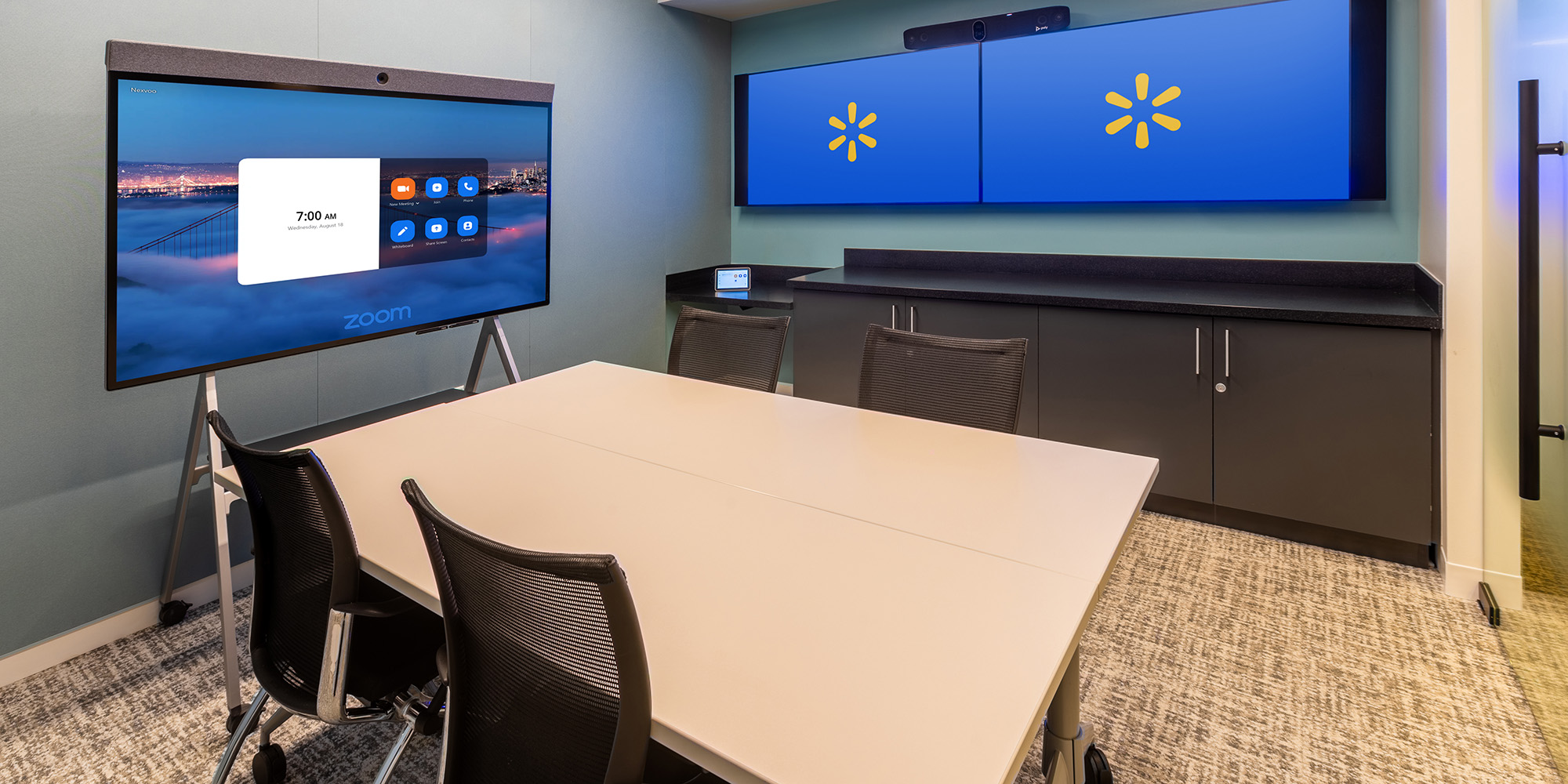
Meeting rooms are no longer defined by a single device or platform, but by how integrated systems and AI work together to support collaboration, flexibility, and scalability. As organizations continue to adapt to hybrid work, meeting room technology is evolving into platform-driven environments where solutions like Zoom and Microsoft shape not only the meeting experience but the entire room design.
This shift marks a change in how organizations approach workplace collaboration technology. Instead of building rooms around hardware, businesses are now designing hybrid meeting room solutions around the collaboration platforms they use every day. This approach ensures consistency, simplifies user experiences, and unlocks the full value of AI-powered meeting capabilities.
At Ford AV, we help organizations align enterprise AV solutions with these platforms, creating meeting environments that are scalable, intuitive, and ready for the future of meeting rooms.
Platform-Driven Meeting Room Design
One of the most important trends shaping the future of meeting rooms is the rise of platform-driven design. Today, the collaboration platform often dictates how a room should function, what technology it requires, and how users interact with it.
Organizations that standardize on Zoom Rooms or Microsoft Teams Rooms must design their meeting spaces to support those ecosystems. This includes aligning cameras, microphones, compute systems, and control interfaces with platform requirements. When done correctly, this approach creates a familiar experience for users across every meeting room.
Designing around the platform also ensures access to rapidly evolving features. As Zoom and Microsoft continue to release updates, organizations with platform-aligned meeting room technology can take advantage of new capabilities without needing to redesign their spaces from scratch.
Where AI Fits in the Future of Meeting Rooms
Artificial intelligence is quickly becoming a defining element of modern meeting room technology. What was once considered an enhancement is now an expectation, particularly in hybrid meeting room solutions where remote collaboration must feel natural and engaging.
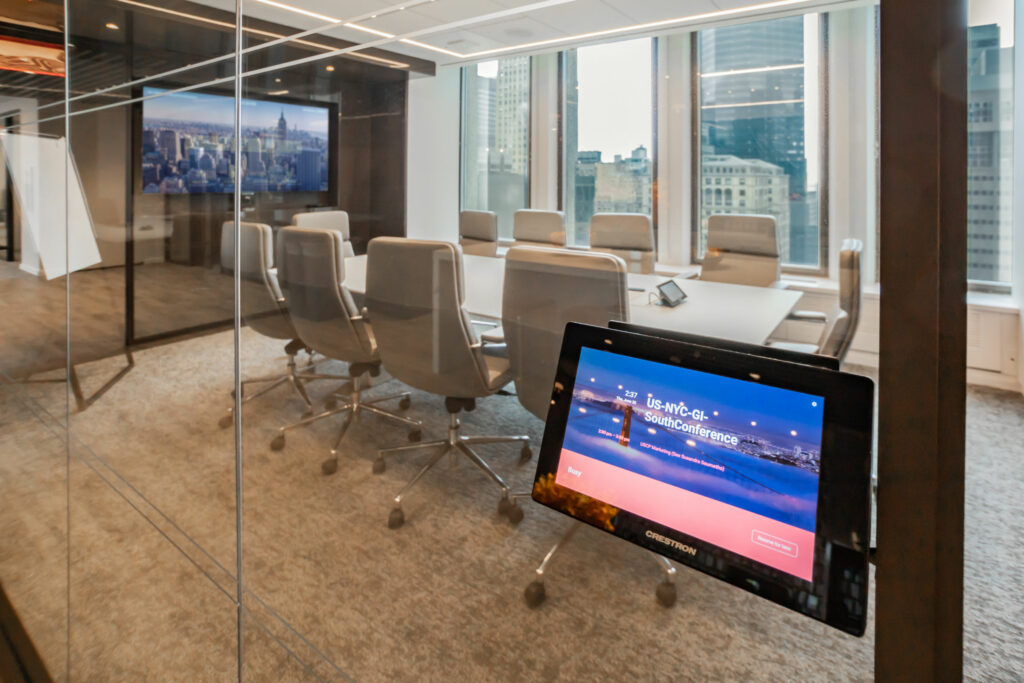
AI-powered features such as Zoom Intelligent Director are transforming how participants are seen and heard. By using multiple cameras and advanced processing, these systems create individual views of in-room participants, improving visibility and engagement for remote attendees. This directly supports meeting equity, a critical goal in hybrid work environments. AI note-taking has also emerged as a core capability. Tools like Zoom AI Companion automatically generate meeting summaries, track action items, and provide searchable transcripts.
Within the Microsoft Teams Rooms ecosystem, similar AI-driven innovations continue to evolve, including intelligent speaker tracking and meeting recap tools. Together, these advancements demonstrate how AI in meeting rooms is shifting the focus from simply connecting participants to enhancing the entire collaboration lifecycle.
Automation as the Foundation of Smart Meeting Rooms
While AI is driving innovation, automation remains a foundational component of smart meeting rooms. Reliable, rules-based control systems ensure that meeting room technology operates consistently and without friction. In modern enterprise AV solutions, automation manages core functions such as powering displays, switching inputs, and integrating with scheduling systems. These capabilities reduce the need for user interaction and help ensure meetings start on time. For organizations deploying hybrid meeting room solutions at scale, this level of consistency is essential.
However, the role of automation is evolving. Rather than being the primary focus, it now supports platform-driven experiences and AI-powered features. When automation and AI are designed to work together, organizations benefit from both reliability and intelligence in their meeting spaces.
Hybrid Work and Meeting Equity
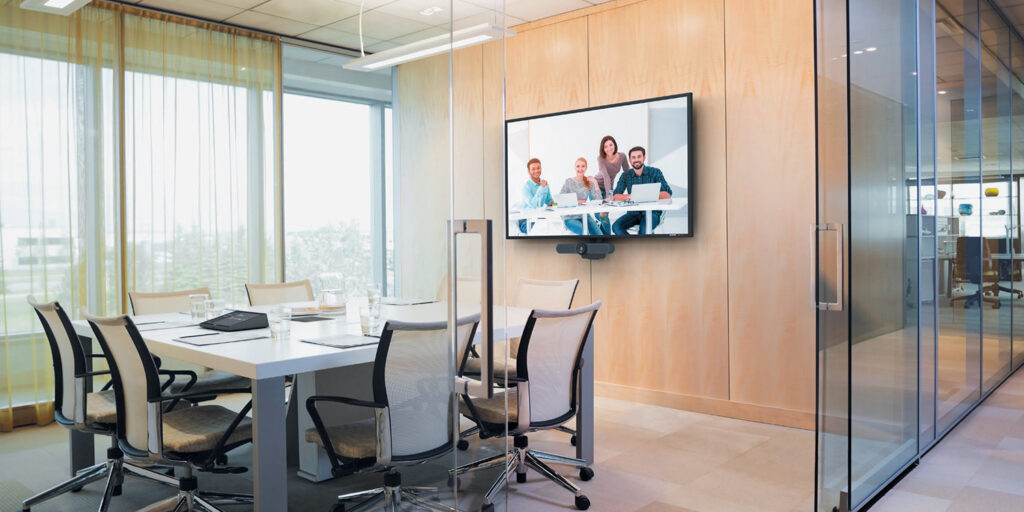
Hybrid work has fundamentally reshaped expectations for meeting room technology. The future of meeting rooms depends on creating video conferencing environments where in-room and remote participants can collaborate equally, regardless of location. This shift has placed greater emphasis on meeting equity, which is the ability for all participants to see, hear, and engage effectively. Achieving this requires more than high-quality hardware. It depends on how well systems are designed to support platform-specific features such as intelligent video layouts, speaker tracking, and dynamic content sharing.
Hybrid meeting room solutions now incorporate multiple camera angles, advanced audio coverage, and AI-driven enhancements to ensure remote participants are fully included. These design strategies reflect a broader trend in workplace collaboration technology, where the focus is on creating inclusive and productive meeting experiences rather than simply enabling connectivity.
Enterprise AV Solutions and Remote Management
As meeting rooms become more sophisticated, enterprise AV solutions must also address scalability, security, and manageability. Organizations are increasingly relying on centralized tools to monitor and maintain their meeting room technology across multiple locations.
Platforms like Zoom Device Management and Microsoft Teams Rooms Pro Management provide built-in capabilities for remote monitoring, diagnostics, and updates. These tools allow IT teams to maintain consistent performance, reduce downtime, and proactively resolve issues before they impact users. This level of control is essential for organizations with large-scale deployments. By integrating remote management into their meeting room strategy, businesses can ensure their technology remains reliable and aligned with evolving platform capabilities.
Planning for the Future of Meeting Rooms
Planning for the future of meeting rooms requires a strategic approach that goes beyond selecting individual technologies. Organizations must consider how platforms, AI, automation, and enterprise AV solutions work together to support long-term collaboration goals.
A successful strategy starts with standardizing on a collaboration platform and designing meeting rooms to maximize its capabilities. From there, organizations can incorporate AI-driven features, integrate automation for reliability, and leverage remote management tools to support scalability.
Ford AV works with organizations to bring these elements together, delivering hybrid meeting room solutions that are flexible, scalable, and aligned with the demands of modern work. By focusing on system-level design and platform integration, businesses can create meeting spaces that not only meet today’s needs but continue to evolve with the future of meeting rooms.
Immersive Video Frequently Asked Questions
What defines the future of meeting rooms?
The future of meeting rooms drives flexibility, hybrid collaboration, and intelligent AV technology. Modern spaces are designed to support in-person and remote participants equally, with audio, video, and control systems.
How are hybrid meetings shaping modern meeting room design?
Hybrid meetings require meeting rooms to prioritize clear audio, intelligent cameras, and reliable connectivity. Design now focuses on creating an inclusive experience where remote participants feel just as engaged as those in the room.
What AV technology is essential for future-ready meeting rooms?
Future-ready meeting rooms rely on high-quality microphones, AI-enabled cameras, collaboration displays, and centralized control systems. These technologies work together to simplify meetings and improve communication.
Why is flexibility important in the future of meeting rooms?
Flexible meeting rooms allow organizations to adapt to changing needs, room sizes, and meeting styles. Movable furniture, scalable AV systems, and adaptable layouts ensure spaces remain effective as workplace demands evolve.
How does Ford AV help organizations prepare for the future of meeting rooms?
Ford AV designs and integrates meeting room solutions that support hybrid collaboration, long-term scalability, and ease of use. Each space meets today’s needs while remaining ready for future technology advancements.
- Decades of Meeting Room AV Expertise – Over 50 years designing, integrating, and supporting enterprise AV solutions.
- Local Service, National Reach – Nationwide coverage with local technicians for installation, maintenance, upgrades, and ongoing support of smart conference rooms and hybrid meeting spaces.
- Platform-Agnostic, Workflow-Focused – Ford AV evaluates and implements future-ready meeting room technology that integrates with your existing collaboration tools.
- Scalable Smart Conference Rooms – From AI-enabled cameras and intelligent audio to touchless controls, our meeting rooms are designed to evolve with your needs.
Ready to create the future of meeting rooms in your organization? Fill out the form below to connect with Ford AV’s experts in AI-enabled, automated, and hybrid meeting room solutions.
Let’s Get Started!