
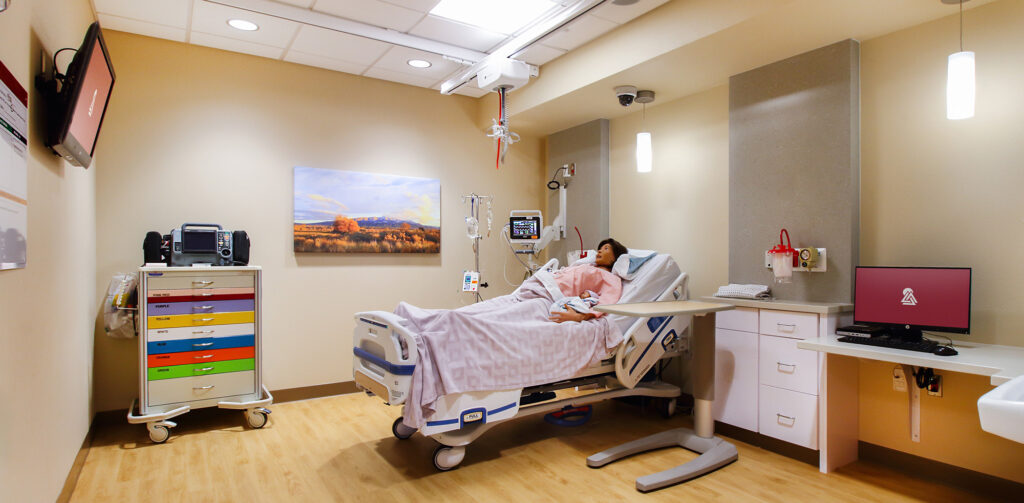
A nursing student misses a critical step during a code blue scenario. Ten minutes later, in the debriefing room, the instructor pulls the exact moment on a synchronized multi-camera timeline. They annotate the sequence and walk the entire cohort through what happened and why. That feedback loop is the entire point of simulation-based education. High-fidelity training environment technology is what makes that possible. Coordinated video capture, controlled audio, structured debriefing, and observation connectivity work as one system rather than a collection of parts.
What Makes a Training Environment “High-Fidelity”
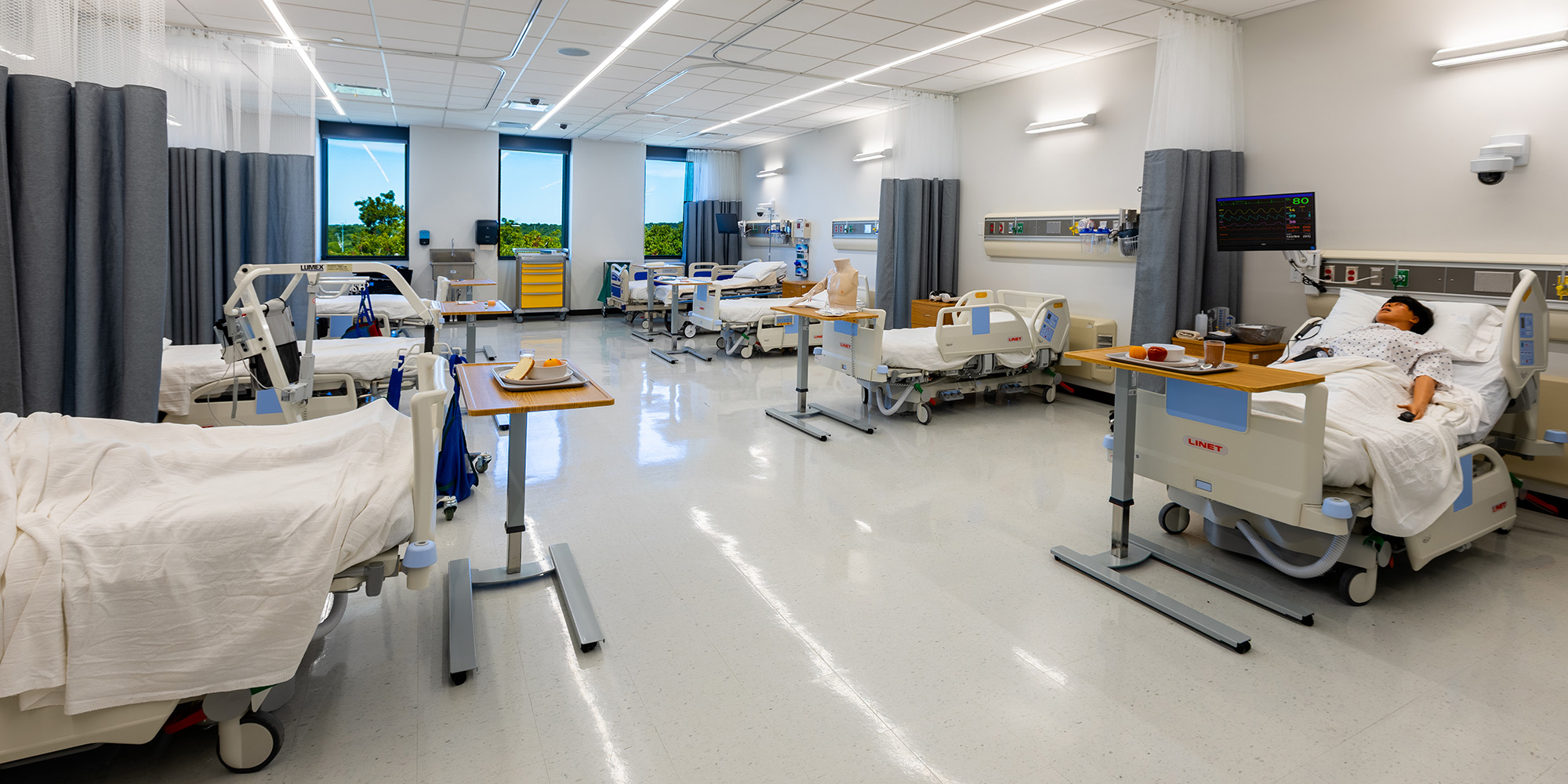
Fidelity in medical simulation refers to how closely a training scenario replicates real conditions. Manikin technology and physical set dressing get most of the attention, but the AV layer determines whether the experience holds up. A realistic clinical bay loses its value if the audio is unintelligible during playback, if the camera angle misses the intervention, or if learners can hear instructors talking through the observation glass.
High-fidelity training environment technology addresses four requirements simultaneously. The environment must capture everything that happens without an operator in the room. It must isolate audio so simulation, observation, and debriefing spaces do not bleed into one another. It must make recorded material immediately usable for structured feedback. And it must be operable by educators who are focused on teaching, not on running an AV system.
High-Fidelity Multi-Camera PTZ Video Capture
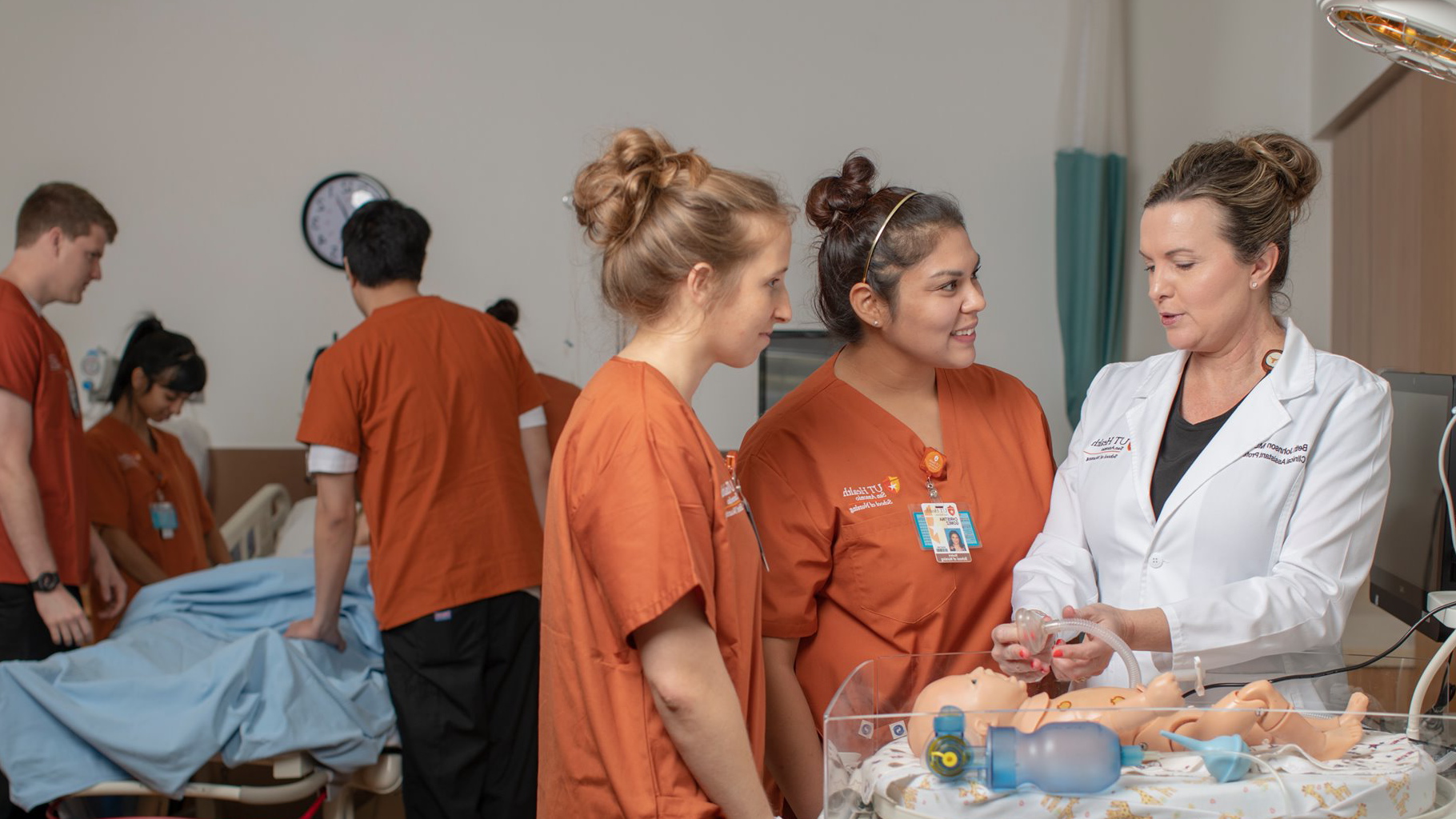
The foundation of healthcare simulation is the PTZ camera and video capture systems. A single fixed camera cannot cover a clinical bay where learners move around a bed, gather at a crash cart, and rotate positions throughout a scenario. Most simulation rooms require three to five cameras. They use a wide-angle view of the full room, one or two PTZ cameras positioned for close work at the bedside, an overhead or boom camera for procedural detail, and often a dedicated feed from the patient monitor or task trainer.
PTZ cameras capture activity from multiple angles without a camera operator in the room. This is important because any additional person in the bay compromises realism. Presets let educators configure standard views for recurring scenarios. Remote operation from the control room means angles can adjust mid-scenario without interrupting the exercise.
Camera placement deserves real design attention. Ceiling-mounted positions keep sightlines clear and equipment out of the scenario but require coordination with lighting, HVAC, medical gas booms, and ceiling-mounted equipment. Retrofitting cameras into a finished sim lab is more expensive and produces worse angles than planning placement alongside the rest of the room.
Training Space Audio Design and Zoning
Audio is where simulation AV projects most often underperform, and it is the component that matters most for debriefing quality. Video with poor audio is nearly useless for evaluating communication, closed-loop verification, or team coordination, which are frequently the competencies the scenario was designed to assess.
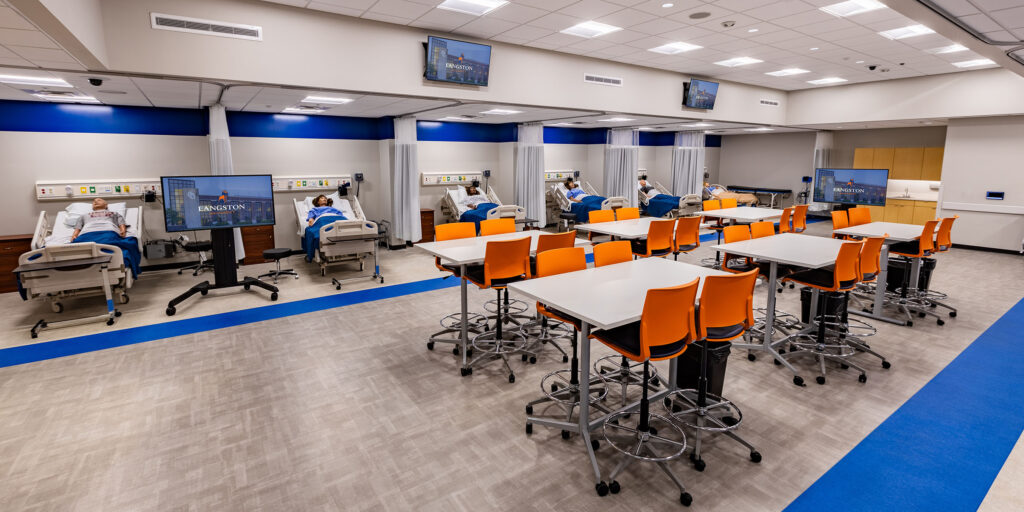
Simulation environments require ceiling microphone arrays or distributed microphones capable of capturing intelligible speech from learners who are moving, turning away, speaking through masks, and talking over equipment alarms. That is a harder audio problem than a conference room, and it calls for DSP-driven processing, careful gain structure, and acoustic treatment appropriate to a room full of hard, cleanable surfaces. Audio zoning allows the simulation bay, observation room, control room, and debriefing space to each have independently managed audio.
Observation Room AV Technology
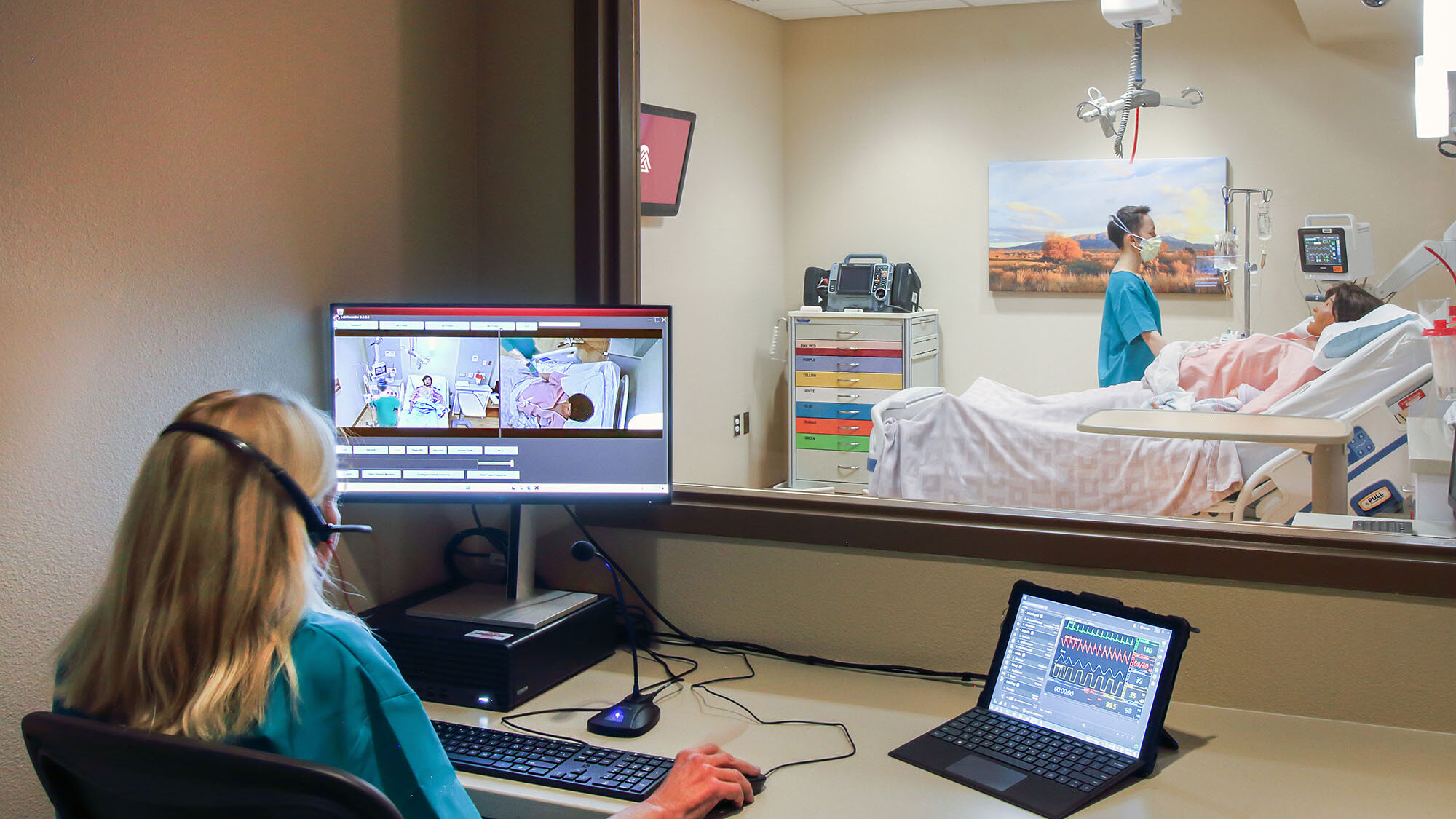
Observation room AV technology connects the people watching to what is happening in the simulation space. Most observation suites use one-way glass paired with live video feeds, and the combination requires coordination between the AV design and the architectural detailing. One-way glass depends on a significant lighting differential between the simulation bay and the observation room. If the observation side is too bright, the illusion fails, and learners can see through. AV design must account for display brightness, monitor placement, and ambient light contribution from screens in the observation room.
Live video streaming to observation rooms supplements the direct view with angles the glass cannot provide: overhead procedural views, monitor feeds, and close-ups at the bedside. Multi-view displays let faculty watch several camera angles simultaneously, and larger programs often stream to additional classrooms or remote locations, so a single scenario can serve a much larger cohort than the observation room holds.
Debriefing Platforms and Structured Playback
Training room video capture and debriefing is where the educational value of simulation is actually realized. Research in simulation education identifies debriefing as the most important determinant of learning outcomes. Purpose-built simulation debriefing platforms handle functions that general-purpose recording cannot. They synchronize multiple camera feeds with audio and data from the patient monitor into a single timeline. This allows instructors to bookmark and annotate events in real time while the scenario is running. They organize recordings by learner, cohort, scenario, and competency, and manage retention, access permissions, and consent in line with institutional policy.
The debriefing room needs AV designed for discussion. Displays sized and positioned for a group, audio that supports conversation, and simple playback control that an instructor can operate while facilitating. Many programs also equip debriefing rooms for video conferencing, so remote faculty or additional learners can participate.
Control System Integration for Simulation Centers
A simulation center has more moving parts than almost any other AV environment: multiple cameras per room, multiple rooms running concurrently, recording and streaming destinations, audio zones, talkback paths, manikin control, and scheduling. Without a control system tying it together, operating the center becomes a specialist job.
Simulation center AV integration depends on a control layer that lets a simulation technician or educator start a scenario, select camera presets, initiate recording, route feeds to the correct observation and debriefing destinations, and manage talkback from a single interface. Integration with the broader facility matters as well.
How Ford AV Approaches Simulation Lab AV Design
Ford AV designs and integrates simulation AV systems for healthcare systems, nursing schools, medical universities, public safety academies, and higher education institutions. Our simulation work includes projects such as the UTSA Center for Simulation Innovation and nursing simulation facilities at St. Mary’s University, where multi-camera capture, observation connectivity, debriefing integration, and control systems are a coordinated environment rather than assembled from separate scopes.
For simulation programs pursuing SSH accreditation, we design to those technical capabilities. For programs planning phased growth, we build infrastructure that accommodates additional rooms and capabilities without rebuilding the core system.
High-Fidelity Training Frequently Asked Questions
What AV technology is required for a high-fidelity training environment?
A true high-fidelity training environment requires multi-camera PTZ video capture for full-scene coverage, high-quality audio zoning to isolate simulation and observation rooms, an integrated debriefing platform for structured playback and annotation, one-way observation room AV, and a central control system for managing all inputs and outputs. Each component must be designed together to function as a cohesive simulation system.
How do PTZ cameras support simulation training and debriefing?
PTZ (pan-tilt-zoom) cameras allow instructors to capture all activity within a simulation room from multiple angles without requiring camera operators. Footage is streamed in real time to observation rooms and recorded for post-simulation debriefing review, giving educators the ability to reference specific moments, annotate performance, and deliver structured, evidence-based feedback.
What makes a simulation lab AV design different from a standard classroom?
Simulation labs require purpose-designed AV for environments where realism, recording accuracy, and audio isolation are critical. Unlike a conference room, a sim lab supports concurrent activity across a simulation bay, observation room, and debriefing space, with independent audio and video feeds that route, record, and control in real time. Ford AV’s simulation design group builds to the accreditation standards defined by the Society for Simulation in Healthcare (SSH).
What industries use high-fidelity training environments beyond healthcare?
Medical simulation is the most recognized application. High-fidelity training environments are also deployed in public safety and law enforcement training academies, corporate skills training centers, aviation and emergency response programs, and higher education clinical skills labs. Ford AV has designed simulation AV systems across healthcare, education, and public safety sectors nationwide.
Partner with Ford AV for Simulation Lab AV Design and Integration
- Specialized Simulation AV Expertise – Ford AV designs and integrates medical simulation AV systems for healthcare systems, nursing schools, medical universities, public safety academies, and higher education institutions nationwide.
- Proven Simulation Center Project History – Ford AV delivers coordinated capture, observation, debriefing, and control environments for programs across the country.
- Designed to SSH Accreditation Standards – Our simulation designs support the recording, debriefing, and assessment capabilities that Society for Simulation in Healthcare accreditation requires.
- Early Architectural Coordination – Ford AV engages during design, coordinating camera placement, observation glass lighting, acoustic treatment, and infrastructure.
- Full-Lifecycle Support – Design, installation, control programming, commissioning, faculty training, and ongoing managed services from a single accountable partner.
Ready to Design or Expand Your Simulation Center?