
Fall 2026 – Making audio and video accessible begins by understanding how different people experience a space. The Americans with Disabilities Act (ADA) establishes important guidelines, and good design goes further—removing barriers that can prevent someone from seeing, hearing, understanding or interacting with information.
Accessibility should be considered from the start, shaping display placement, assistive listening, captioning, emergency communication, and the overall user experience
Different Needs, Different AV Solutions
Accessible AV considers how people with different abilities experience a space. Multiple communication methods give every user a better opportunity to access, see, hear, and interact with information effectively.
Wayfinding Everyone Can Use
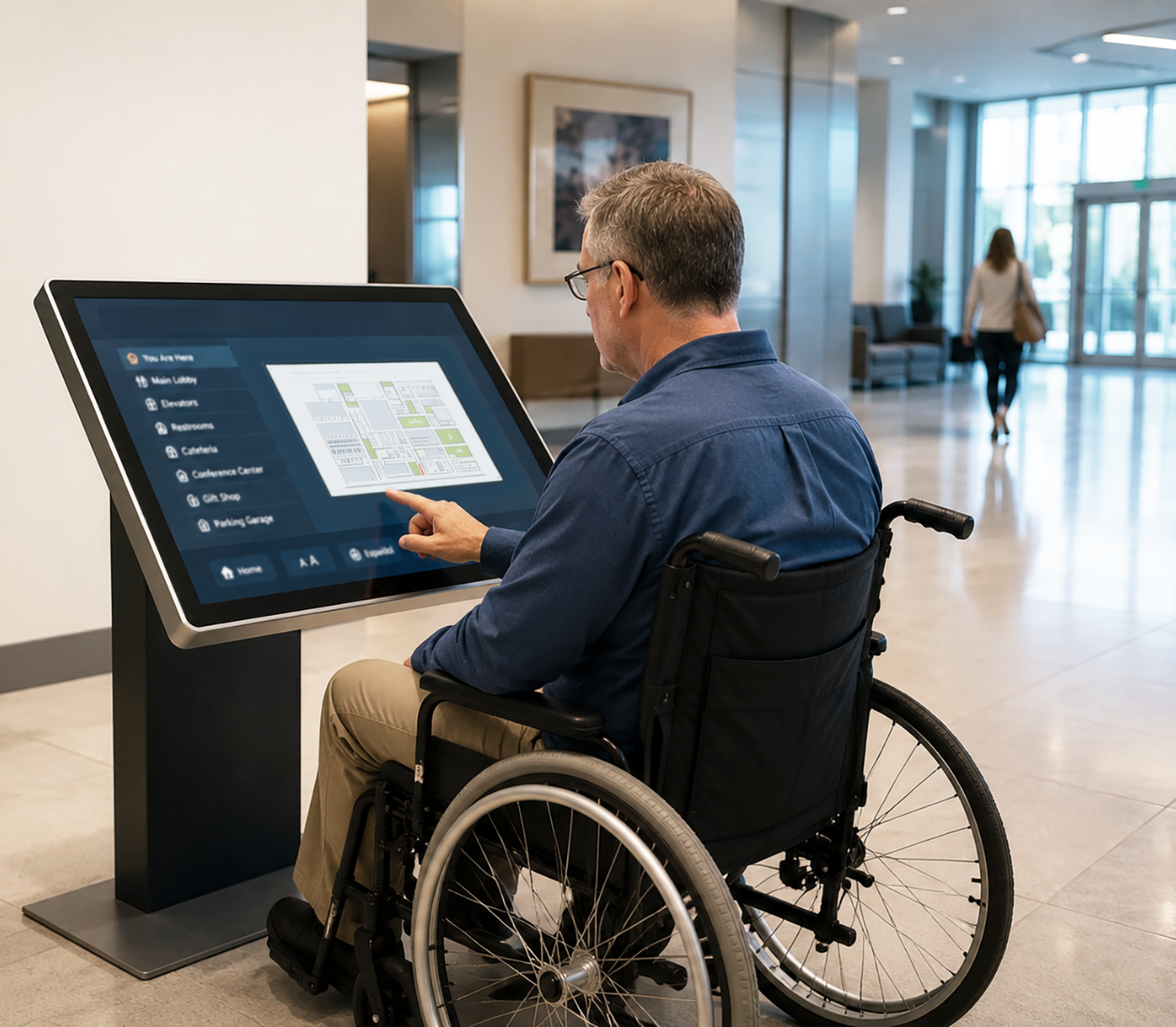
Making interactive displays and controls accessible generally requires placement of 15 to 48 inches above the floor and reserves clear space for wheelchair access. Screens positioned for seated viewing, with reduced glare, large type, high contrast and simple navigation, improve usability for everyone.
Placing Displays Without Creating Barriers
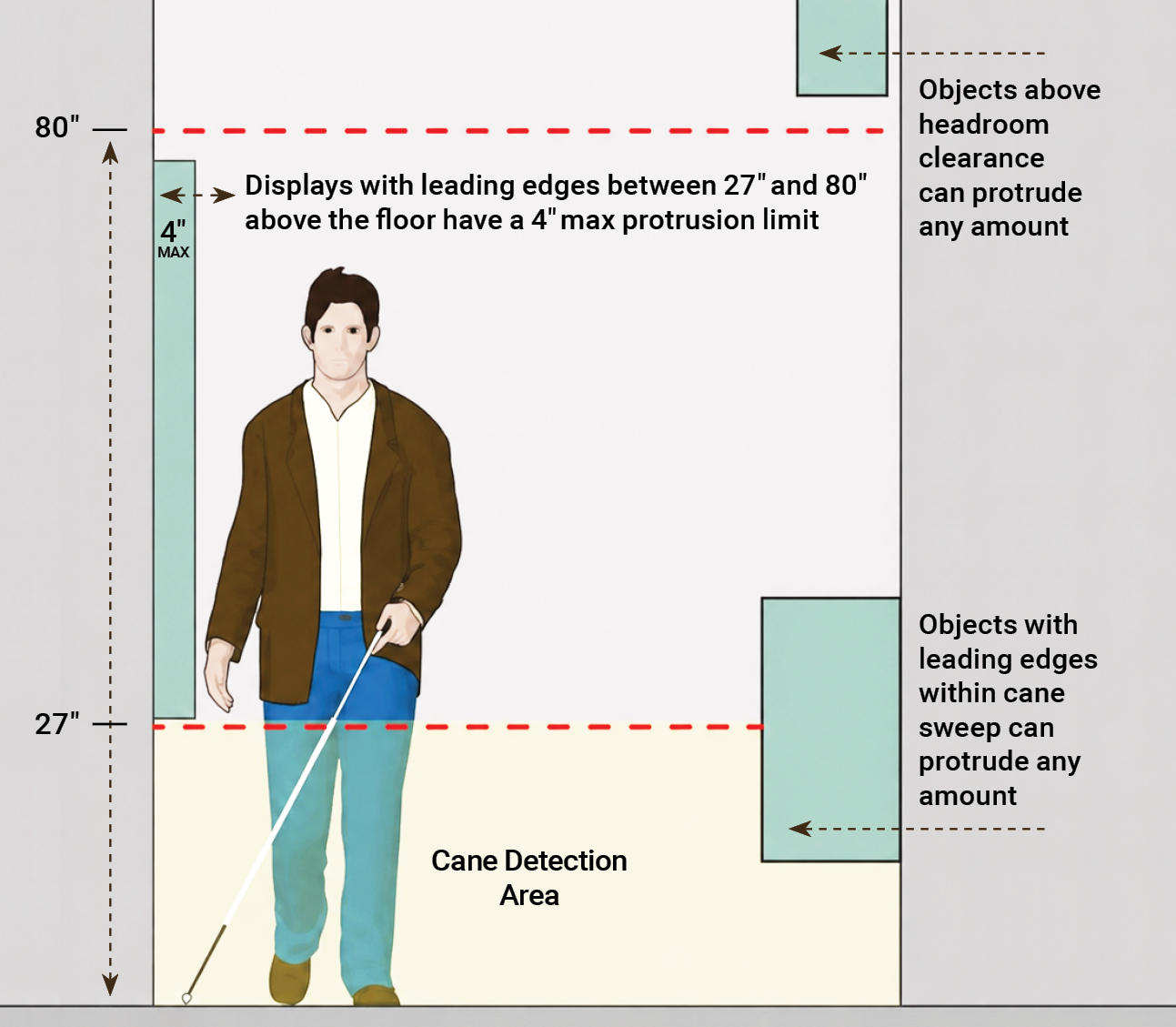
Wall-mounted displays along circulation paths must be positioned to avoid creating hazards. Displays with leading edges between 27 inches and 80 inches above the floor may protrude no more than 4 inches into the path. If a display extends farther, a properly positioned fixed element, such as a credenza below the display, can provide cane detection when configured to meet ADA requirements.
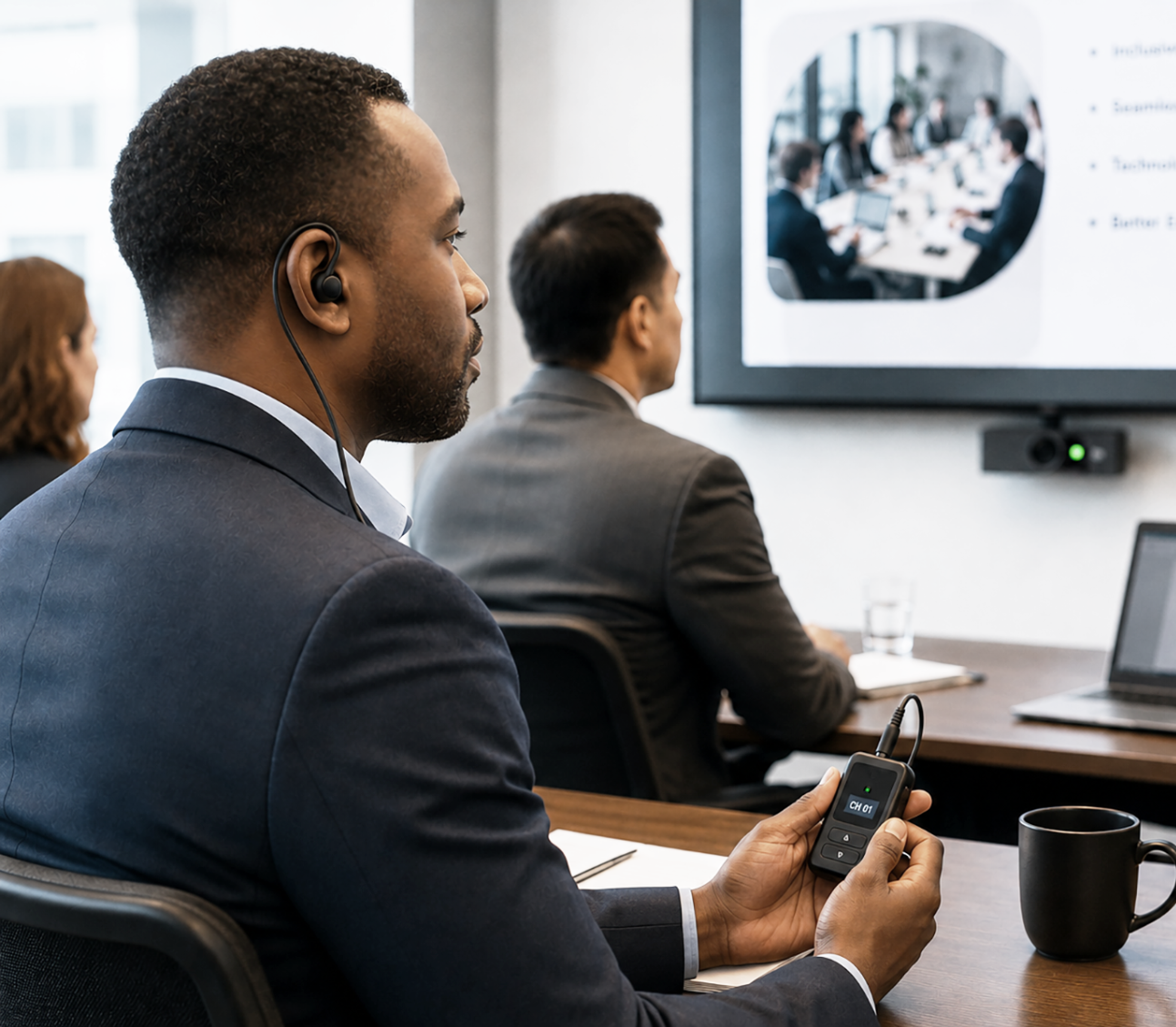
Delivering Audio Directly To The Listener
Assistive listening systems deliver clearer audio directly to a headset, hearing aid, cochlear implant, or personal device. Available solutions include infrared, RF, Wi-Fi, and induction-loop systems selected according to room size, privacy requirements, and user preferences.
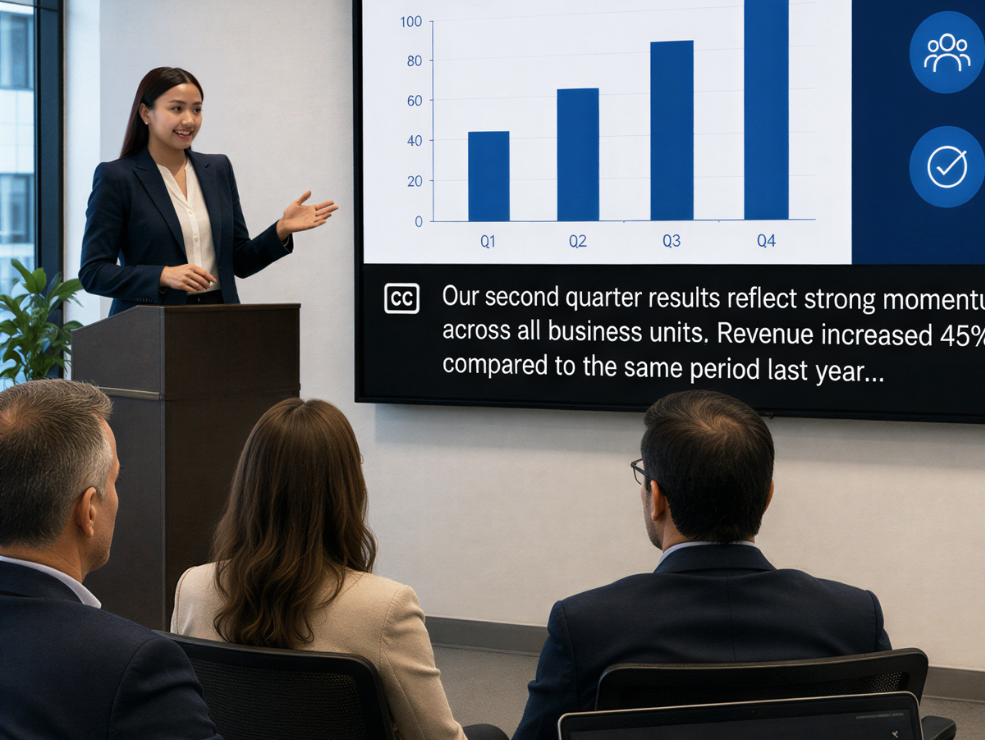
Making Spoken Words Visible
Live captioning converts speech into text for presentation screens, livestreams, and personal devices. Built-in captioning in Microsoft Teams, Zoom and Webex, along with dedicated captioning systems, supports people with hearing loss, auditory-processing difficulties or language barriers.
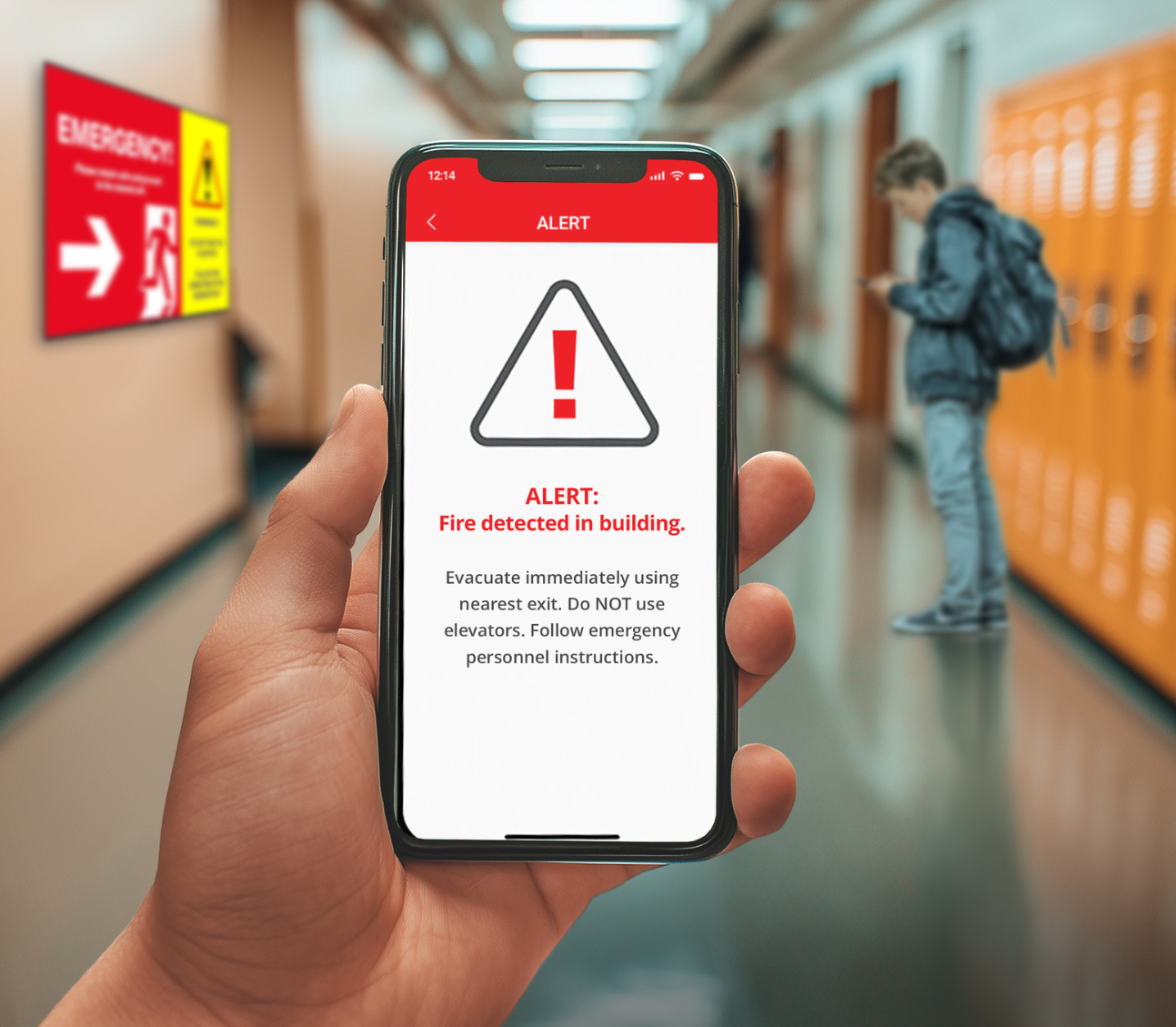
Emergency Messages Everyone Can Receive
Accessible emergency communication uses more than sound or sight alone. Integrated AV systems combine audible announcements with visible strobes, digital signage, room displays and mobile notifications.
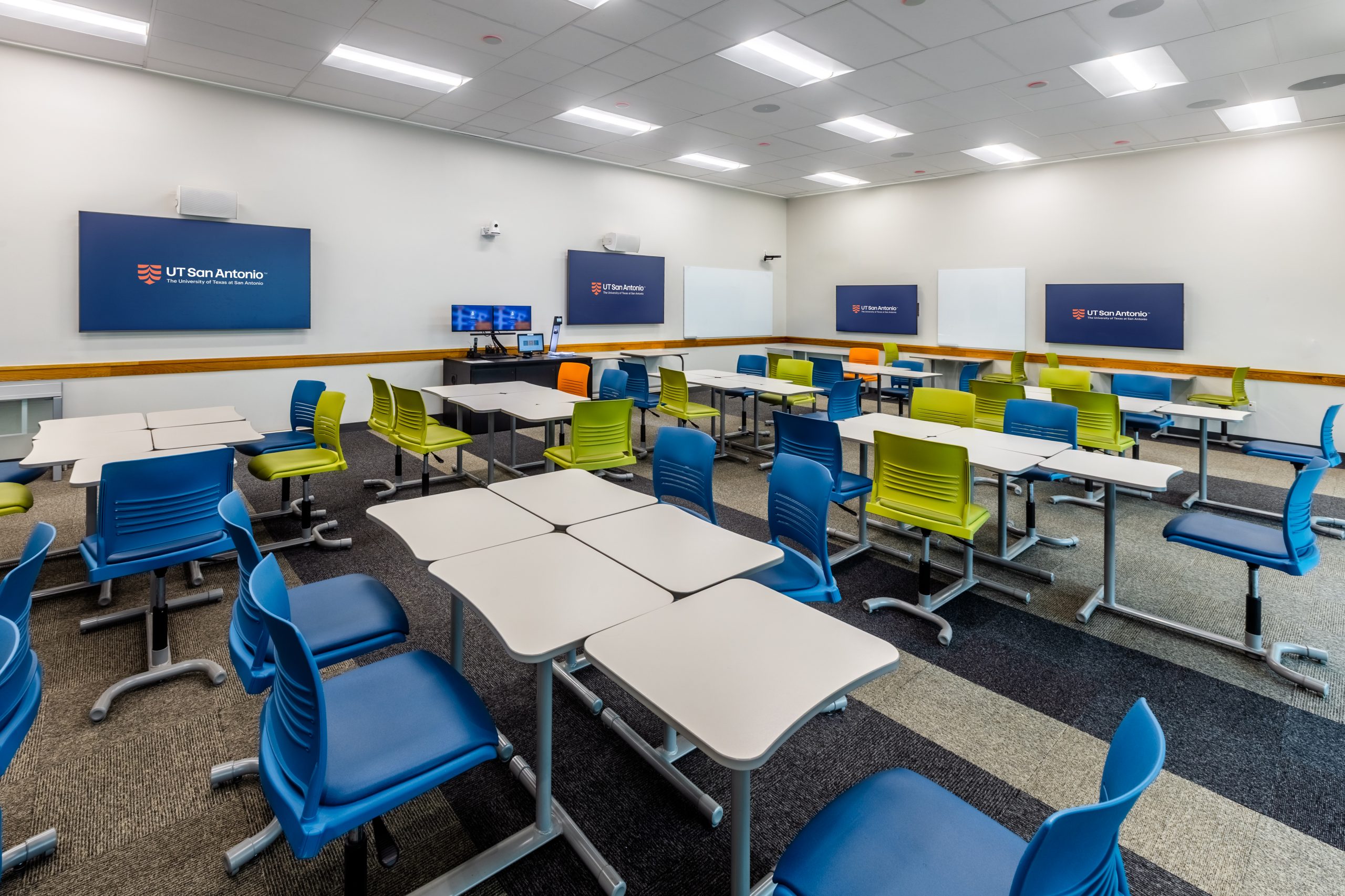
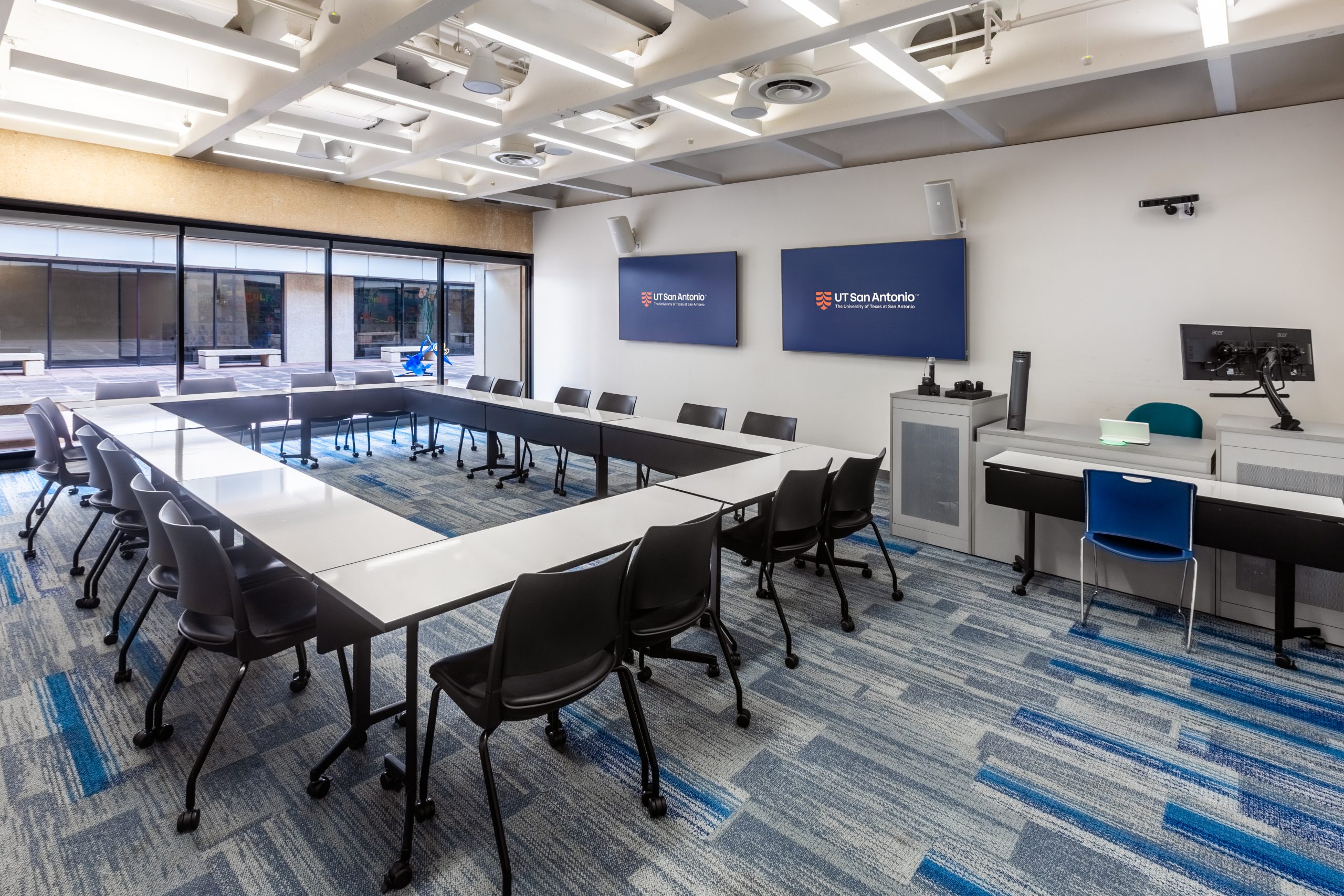
How University of Texas at San Antonio Delivers Equal Access to Learning
At the University of Texas at San Antonio (UTSA), accessibility is an important part of creating learning environments that provide every student with equal access to instruction. Throughout classrooms, lecture halls, and presentation spaces, Ford AV integrates assistive listening technology that supports students with hearing impairments.
RF assistive listening systems transmit audio using protected FCC licensed radio frequencies, providing reliable communication without interference from common wireless devices. At UTSA, infrared (IR) technology takes reliability a step further. Instead of transmitting over radio frequencies, IR emitters use infrared light to deliver lecture audio directly to personal receivers. Because infrared signals remain within the room and require a direct line of sight, they provide exceptionally clear audio.
The goal is not simply to amplify sound. It’s to provide every student with equal access to learning by delivering clear, intelligible communication directly to those who need it.
Access Starts with Intentional Design
From thoughtful display placement to assistive listening, captioning, and emergency communication, Ford AV designs technology solutions with accessibility in mind from the start—so every space works for everyone.
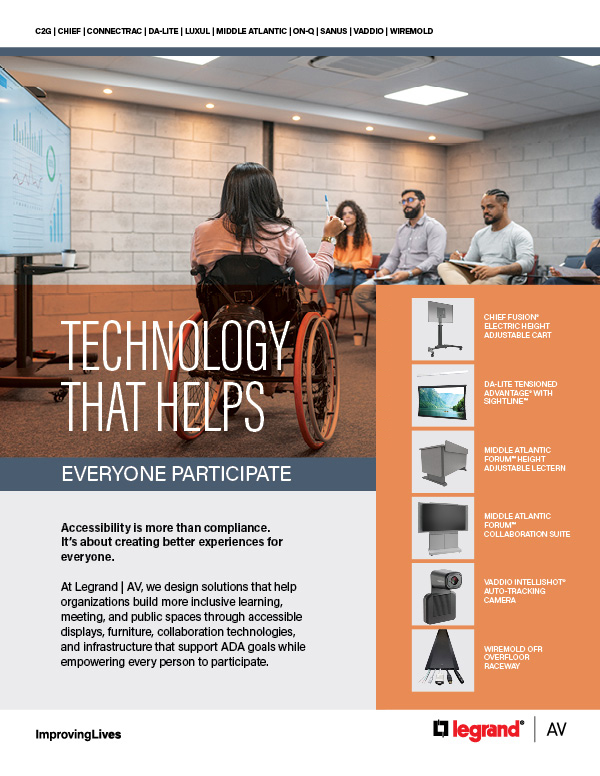
Ready to Make Every Space Work for Everyone?
Accessible design doesn’t have to mean guesswork or last-minute retrofits. With the right partner, ADA compliance becomes the starting point for spaces that communicate clearly to every person who walks in. Ford AV combines engineering expertise, code knowledge, and long-term support to deliver accessible AV systems that are proven, scalable, and ready to perform.
Partner with America’s Leading AV Technology Company
- 50+ Years of Experience – Planning and integrating AV systems that meet accessibility requirements for organizations across multiple industries.
- Nationwide AV Services – Local teams supported by a national network for dependable installation, maintenance, and ongoing support of assistive listening and captioning systems.
- Comprehensive Expertise – From assistive listening and live captioning to accessible display placement, wayfinding, digital signage, and mass notification systems.
- Compliance-Informed Design – Mounting heights, protrusion limits, clear floor space, and receiver counts addressed during design, not after inspection.
- Proven Performance – Trusted by Fortune 500 companies, universities such as UTSA, government agencies, houses of worship, and more for accessible AV planning.
Ready to connect with Ford AV professionals? Fill out the form below to design a space where everyone can see, hear, and take part.
Let’s Get Started!