
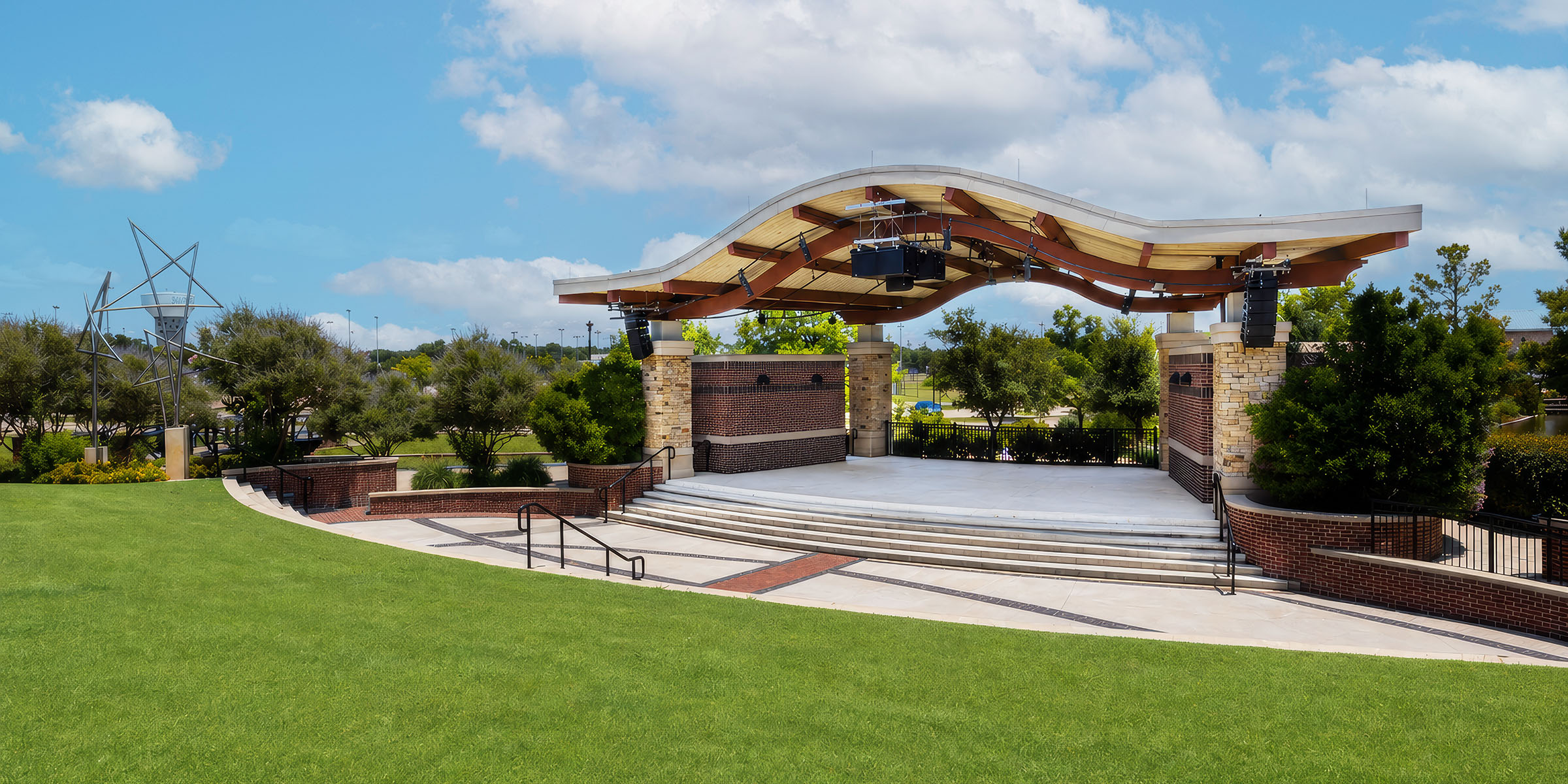
A stadium that seats 40,000 has a problem no single loudspeaker can solve: the nearest fan sits 30 feet from the sound source, and the farthest sits over 300 feet away. Deliver enough volume to reach the back row, and the front rows are punished with excessive sound levels. Aim for comfortable levels up front, and the announcements dissolve into echo before they reach the upper deck. Line array speaker designs exist to solve this problem. By stacking multiple speaker elements into a coupled vertical column and predicting performance using acoustic modeling software, a well-engineered line array projects clear, even sound across long distances and large audiences that traditional speakers cannot cover well.
What is Line Array Speaker Design
Line array speaker design is the engineering process of arranging multiple speaker elements into a vertical column, so they behave as a single, coherent acoustic source rather than a stack of separate speakers. When elements are coupled correctly, their combined output produces a wavefront that stays tightly controlled in the vertical plane while spreading horizontally to cover the audience. That vertical control is the whole point. It lets designers direct sound energy where people are sitting and keep it away from ceilings, walls, and empty air, which is where reflections and intelligibility problems come from. The sound doesn’t reflect off the air. But air does absorb sound, which is a problem that line arrays help with.
The loudspeakers component arrangement is only half the work. The other half is the design that determines how many elements the array needs, the angle between each element (the splay angle), the height and aim of the array, and how the system is tuned once it is deployed. Those decisions separate a line array that delivers consistent sound from an expensive stack of speakers that still leaves dead spots and hot spots throughout the venue.
How Line Array Speaker Design Works
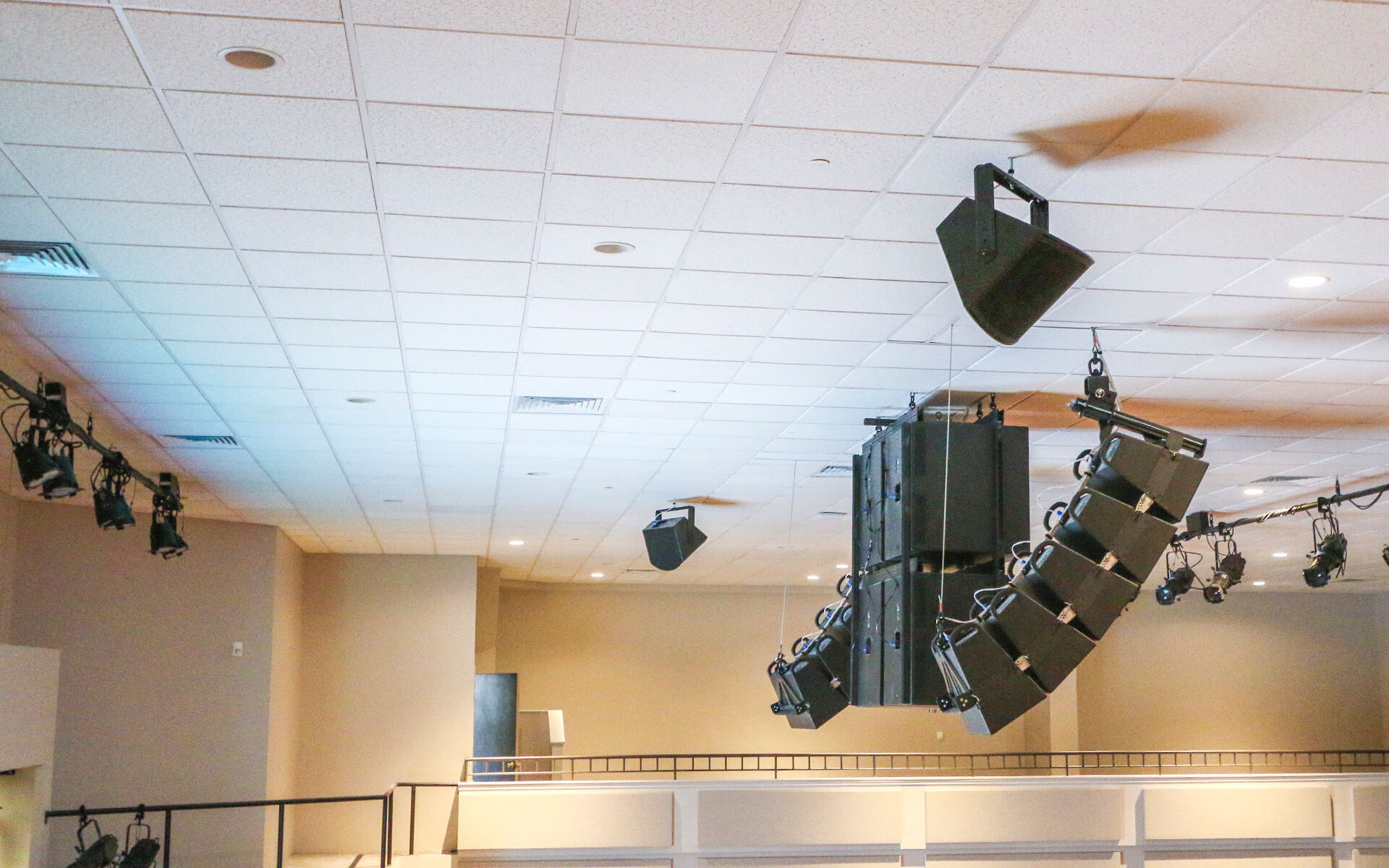
The behavior that makes line arrays effective comes from how sound waves from adjacent elements interact. When multiple elements are placed close together and driven in a coordinated way, their individual outputs combine into a single, larger wavefront. In the vertical plane, that coupling narrows dispersion, so the array throws sound farther with less loss over distance than a single loudspeaker. In the horizontal plane, the array spreads coverage across the seating area.
Two design variables shape that coverage. The first is the number of elements: longer arrays control lower frequencies and throw farther, which is why a large stadium array may use many boxes while a mid-size auditorium needs far fewer. The second is the splay angle between elements. Tightening the angles at the top of the array focuses energy on distant seats, while opening the angles toward the bottom spreads sound across closer seating. A properly curved array delivers roughly equal sound pressure level to the front row and the back row, which is the defining characteristic of a good loudspeaker system.
Why Acoustic Modeling for Line Arrays Is the Real Work
The single biggest determinant of whether a line array performs is not the brand of speaker. It is the acoustic modeling and predictive design that happens before anything gets hung. Every venue has a unique shape, ceiling height, seating rake, and set of reflective surfaces, and all those factors change how sound behaves in the space.
Predictive acoustic modeling lets designers simulate the system before installation. Using the venue’s dimensions and surface materials, modeling software maps how the proposed array will cover the seating area, predicts sound pressure level at every seat, identifies where reflections and problem frequencies will occur, and allows the designer to adjust element count, splay angles, array height, and aim until coverage is even and intelligible everywhere it needs to be. Two identical speaker arrays hung in the same room with different splay angles and aim points will produce dramatically different results, and modeling is how a designer arrives at the right configuration.
Acoustic modeling and predictive design for line array sound systems also account for the things that are expensive to fix later: subwoofer placement and cardioid steering, delay speaker positioning for very deep venues, and the interaction between the sound system and the room’s own acoustics. Getting these right on the model saves the venue from discovering problems after the array is 60 feet in the air.
Line Array vs Point Source Speakers
One of the most common questions in sound reinforcement design is whether a venue needs a line array at all. The comparison of line array vs point source speaker systems for sound reinforcement comes down to the size and geometry of the space.
A point source speaker radiates sound outward from a single location, and its level drops predictably with distance. For small to medium rooms, that behavior is a strength: point source systems are simpler, less expensive, and perfectly capable of covering a modest space evenly. Covering a large venue with point source speakers, though, usually requires multiple zones of speakers at different distances, each with its own level and delay settings, and the transitions between zones are where coverage gets uneven.
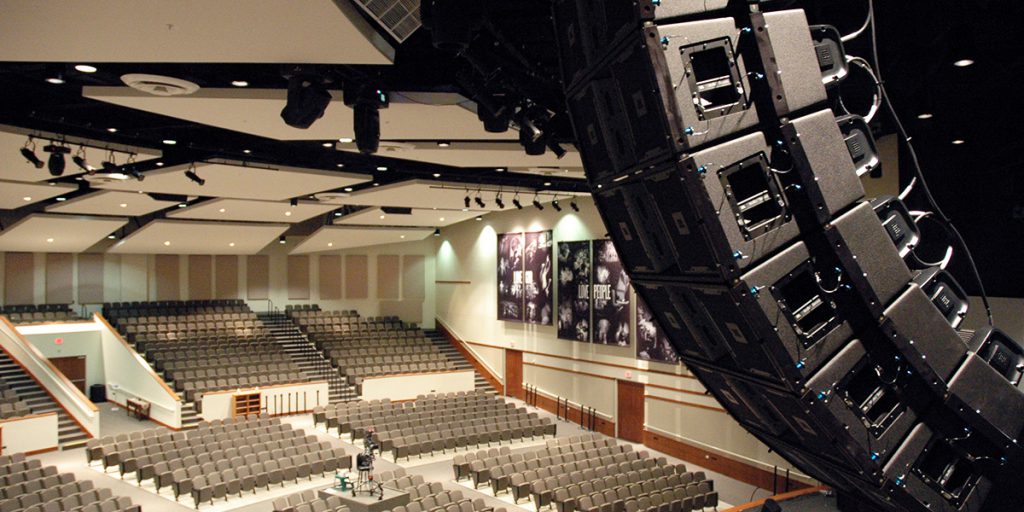
A line array behaves differently. Because the coupled elements act as a single acoustic source with controlled vertical dispersion, one array can cover a long, deep audience from a single hang, maintaining a more consistent sound pressure level from the front of the audience to the back. That is why line arrays are the standard choice for stadiums, arenas, and large auditoriums, while point source and distributed systems remain the right answer for smaller rooms, under-balcony fill, and spaces where a long throw is not required. A good sound reinforcement system design often combines both: a main line array for primary coverage, plus point source to fill speakers for the areas the array cannot reach cleanly.
How Line Array Speaker Design Improves Sound Coverage in Large Venues
Stadiums and Arenas
Stadiums and arenas are the venues where line array sound system design earns its reputation. These spaces combine enormous throw distances, tens of thousands of seats, high ambient noise, and demanding intelligibility requirements for both entertainment and emergency communication. A properly engineered array, or a set of arrays distributed around the seating bowl, delivers announcements, music, and crowd audio at consistent levels across the entire venue while controlling the reflections that a hard, reverberant bowl naturally produces.
Auditoriums and Performing Arts Centers
Auditoriums and performing arts centers demand precision. Here the challenge is not raw distance, but tonal accuracy, natural sound, and even coverage across a raked seating area. Line array design in these venues focuses on controlled coverage that puts sound on the audience and keeps it off the reflective surfaces that would blur speech and music.
Houses of Worship
Line array system design for houses of worship has to balance intelligibility with aesthetics and a wide range of program material. Worship spaces frequently combine spoken word, contemporary music, and traditional acoustic instrumentation in rooms that were often built for reverberance rather than speech clarity. Acoustic modeling is especially valuable here, because worship rooms tend to have the hard, reflective surfaces that make intelligibility difficult without careful coverage control.
How Ford AV Approaches Line Array Sound System Design
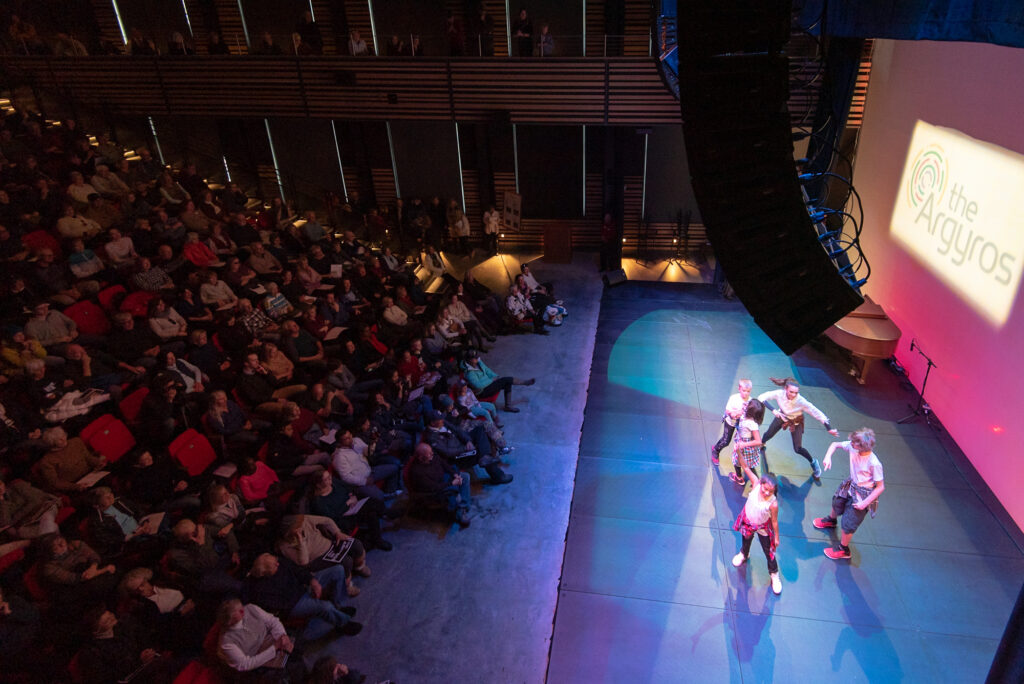
Ford AV designs and installs line array sound reinforcement systems as an engineering practice grounded in acoustic modeling and venue-specific analysis. Our engineers begin with the space itself: its dimensions, seating geometry, surface materials, and intelligibility requirements. Using predictive acoustic modeling, we simulate coverage before anything is specified, optimize array configuration and splay angles for the venue, and design the rigging, signal processing, and system tuning that turn a set of loudspeakers into a coherent, even-coverage system.
Frequently Asked Questions
What is line array speaker design?
Line array speaker design is the process of engineering a vertical arrangement of speaker elements to project sound over long distances with consistent clarity and even coverage. Unlike traditional speakers, properly designed line arrays use acoustic modeling to predict loudspeaker coverage, minimizing dead spots and uneven volume across large or long venues.
How is a line array different from a point source speaker system?
A point source speaker radiates sound from a single location and loses intensity over distance, often requiring multiple speaker zones to cover a large area. A line array couples multiple elements together to act as a single acoustic source, delivering longer throw and more consistent sound pressure levels across the audience, making it the standard choice for large venues like stadiums and arenas.
Why is acoustic modeling important in line array design?
Every venue has a unique shape, ceiling height, and set of reflective surfaces that affect how sound behaves. Predictive acoustic modeling allows designers to simulate coverage patterns before installation, optimizing splay angles and array placement to minimize reflections and ensure even, intelligible sound throughout the space.
What types of venues benefit most from line array systems?
Line arrays are well suited for stadiums, arenas, auditoriums, performing arts centers, convention centers, and houses of worship, any venue where consistent sound coverage across a large area or long distance is required. Ford AV has designed and installed line array sound reinforcement systems for venues including major stadiums and arenas, applying acoustic modeling and engineering expertise to each unique space.
Partner with Ford AV for Engineered Sound Reinforcement
- Acoustic Engineering, Not Just Installation – Ford AV designs line array and sound reinforcement systems around predictive acoustic modeling and venue-specific analysis, delivering even coverage and intelligible sound.
- Proven Large-Venue Experience – Ford AV has designed and installed line array systems for the venues where coverage and intelligibility matter most.
- Full Design-Build Delivery – Ford AV handles acoustic modeling, system design, rigging, installation, tuning, and commissioning in-house, so the engineers who model your system are accountable for how it performs.
- Long-Term Support – Preventive maintenance, system optimization, and rapid-response service keep your sound reinforcement system performing across its full lifecycle.
- Trusted by Venue Operators Nationwide – Facilities directors and operators rely on Ford AV to engineer sound reinforcement systems for coverage, intelligibility, and reliability.
Ready to Engineer the Right Sound System for Your Venue?