
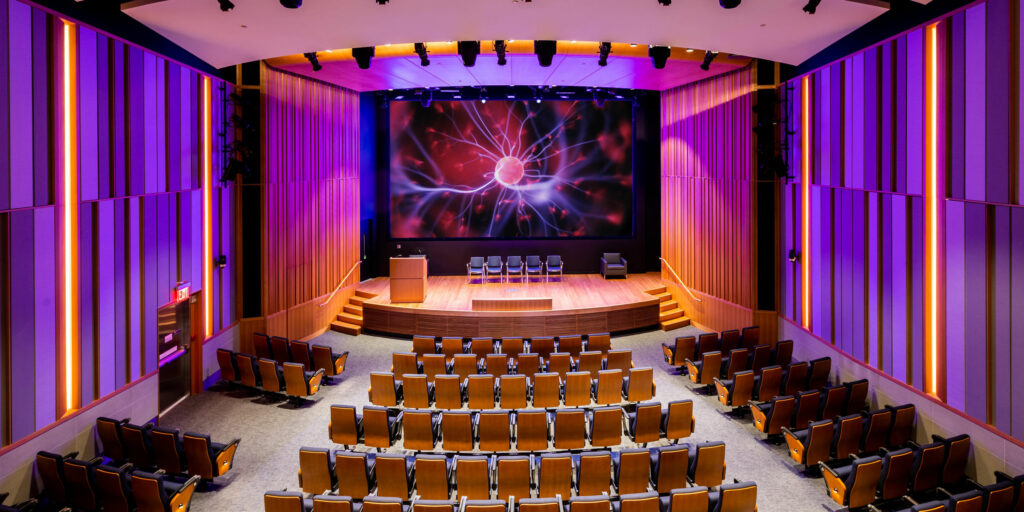
Lighting does more than illuminate a room. In modern audiovisual environments, it directly affects how people appear on camera, how displays perform, how brand colors are perceived, and how comfortable a space feels over time.
As LED lighting has become the dominant technology across commercial and enterprise environments, understanding how it renders color and how it integrates with AV systems has become more important. For organizations investing in video conferencing, digital signage, broadcast spaces, training rooms, or executive boardrooms, lighting is no longer a background utility. It is a performance factor.
The Growing Role of LED Lighting in AV System Design
Historically, lighting and AV systems were designed independently. Lighting simply illuminated the room, and audiovisual systems handled communication and presentation. Today, those lines have blurred.
Modern meeting spaces rely on cameras, large-format displays, LED video walls, and interactive content. Poor lighting can wash out screens, distort skin tones, reduce perceived contrast, and create glare or shadowing that affects video clarity. Even subtle color inconsistencies can make content feel disconnected from its physical surroundings.
Well-designed lighting enhances display performance, improves camera capture, supports accurate color reproduction, and creates visual comfort for extended use. When lighting is considered part of the AV ecosystem, the entire environment performs better.
How LED Lighting vs Traditional Light Sources Affects Color Rendering
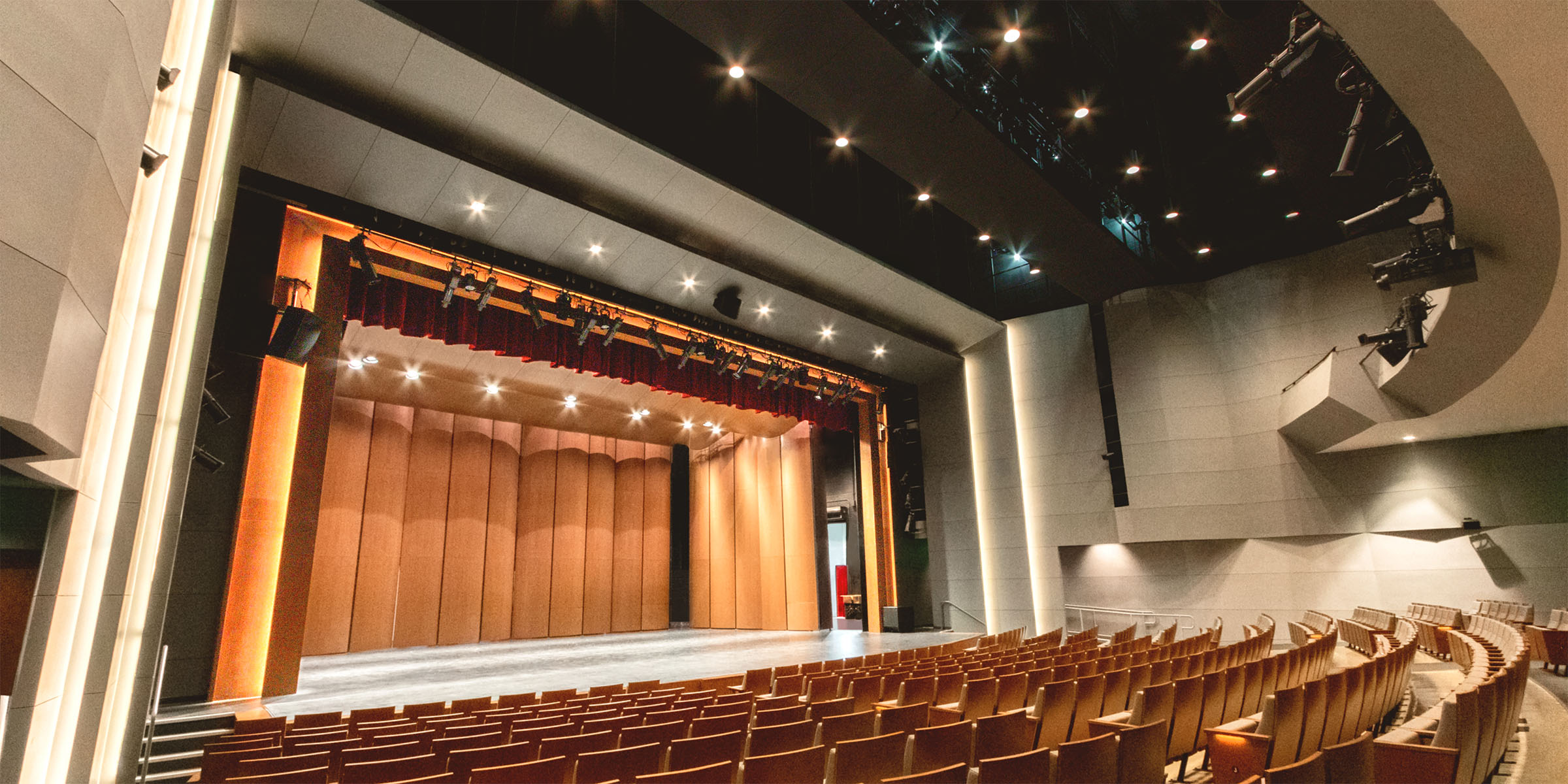
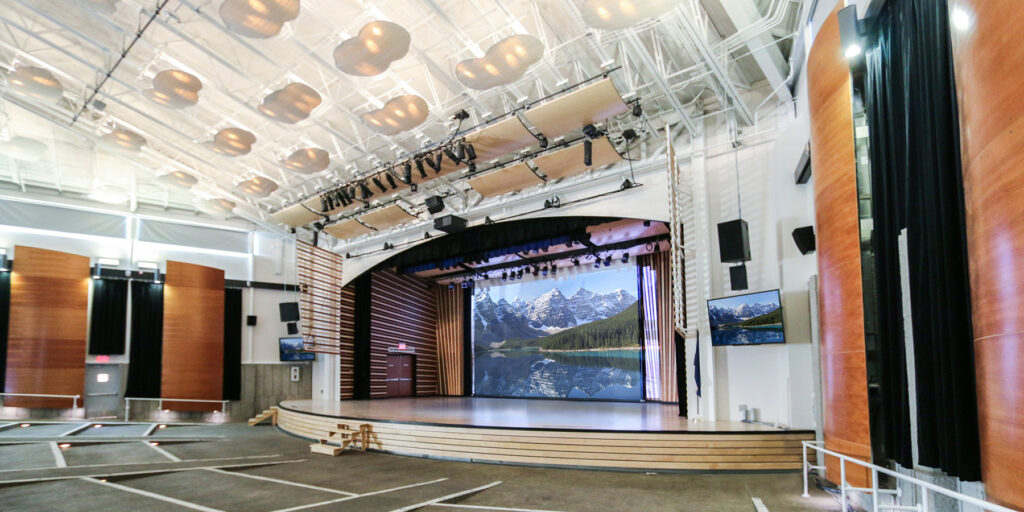
To understand LED color rendering, it helps to understand how different light sources produce light. Traditional incandescent lamps generate light by heating a tungsten filament until it glows. This produces a smooth, continuous spectrum of light similar to natural daylight, just warmer in color temperature. Because the spectrum is continuous, colors tend to appear natural and predictable.
Other legacy sources, such as fluorescent or metal halide lamps, produce light differently. These are discharge sources that generate light through excited gases and phosphor coatings. Instead of a smooth spectrum, they often produce spikes at specific wavelengths. This uneven spectral distribution can cause certain colors to appear exaggerated while others appear muted.
An LED (light-emitting diode) produces light at a very narrow wavelength. Most “white” LEDs are not inherently white. They are typically blue diodes coated with phosphors that convert part of the blue light into broader wavelengths. The mix of emitted blue light and phosphor-converted light creates what we perceive as white. Because LED light is engineered rather than naturally continuous, its spectral makeup depends entirely on how the fixture is designed. That design directly affects how accurately colors are rendered.
What Is Color Rendering Index (CRI)?
Color Rendering Index (CRI) is the most commonly referenced metric for evaluating how accurately a light source reveals colors compared to a natural reference light. It is measured on a scale from 0 to 100, with higher values indicating closer similarity to natural daylight or incandescent light.
Most standard commercial LED fixtures provide CRI around 80, which is sufficient for general illumination. Higher-performance fixtures may offer CRI 90 or above, which is often desirable in conference rooms, broadcast environments, training spaces, and areas where visual accuracy matters.
However, CRI has limitations. CRI is based on a limited set of test color samples and does not fully represent how a light source handles saturated colors. Two fixtures may both be rated at CRI 90 yet produce noticeably different results due to differences in their spectral distribution.
LED Spectrum and Skin Tone Rendering in Video and AV Spaces
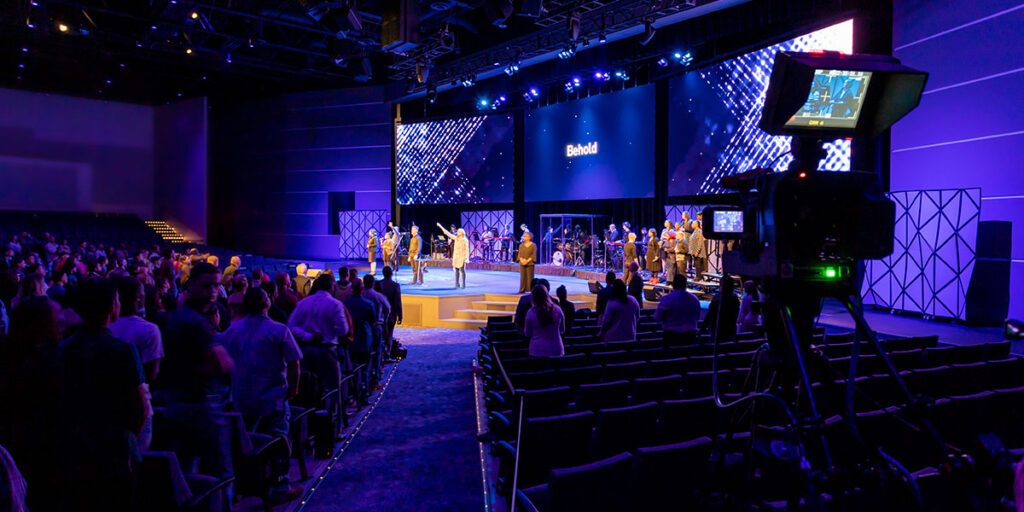
In video conferencing and broadcast environments, lighting quality becomes even more important. Cameras interpret light differently than the human eye, and discontinuities in spectral output can create subtle shifts in how skin tones appear. When lighting lacks sufficient red content, skin may appear pale or slightly gray. When spectral distribution is uneven, certain materials or brand colors may not match their on-screen representations. These discrepancies are often subtle, but they contribute to a sense that something feels “off.”
High-quality LED fixtures with balanced spectral distribution and strong red rendering performance help ensure natural skin tones and consistent color reproduction across both physical and digital environments.
LED Fixture Longevity and Color Stability
Unlike incandescent lamps that typically fail abruptly, LEDs gradually diminish in output over time. Their color characteristics can also shift as they age. Thermal management plays a significant role in this process. Excessive heat accelerates degradation of LED components and phosphors. Fixtures driven at higher currents may produce more brightness initially but may experience faster lumen depreciation and color shift. Quality fixture design accounts for heat dissipation, power regulation, and long-term stability.
Dimming, Control, and AV Integration
Modern LED systems offer powerful control capabilities, but they must be implemented correctly. When lighting control is properly integrated into the same ecosystem as displays, audio systems, and conferencing platforms, the user experience is improved. Preset scenes can adjust brightness and color temperature automatically based on room use, from presentation mode to collaboration mode to video conferencing mode. Rather than juggling multiple systems, users interact with a unified control interface. Lighting becomes part of the room’s workflow instead of a separate utility.
Choosing the Right Light for the Application
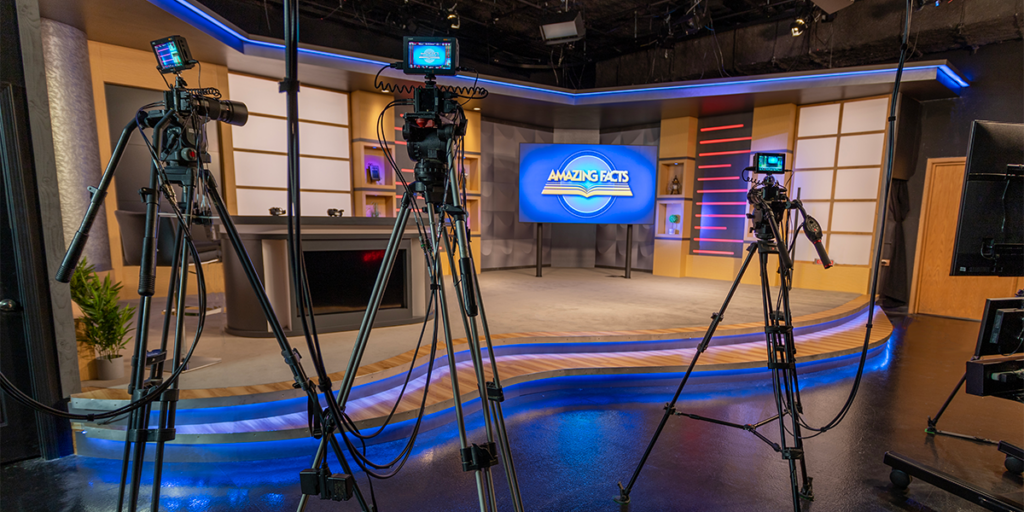
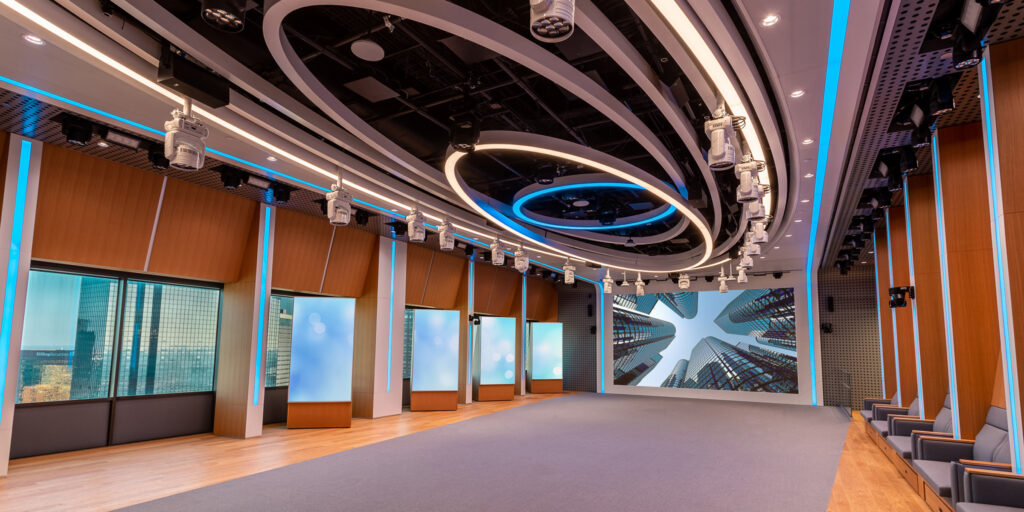
There is no single “best” light source for every environment. The appropriate solution depends on how the space will be used. A warehouse or gymnasium may prioritize efficiency and maintenance access. An executive boardroom may prioritize skin tone accuracy and visual comfort. A broadcast studio may require highly controlled spectral output. A multipurpose training room may need flexible dimming and scene control.
Professional AV and lighting integration consider these variables holistically. It evaluates spectrum, color rendering, efficiency, dimming compatibility, heat management, and long-term maintenance within the context of how the space supports communication and technology.
Lighting as a Foundation for High-Performance AV
LED lighting may not always be the most visible component of an AV system, but its influence is significant. Color rendering affects how accurately people and content appear. Spectral quality influences camera performance and brand consistency. Control systems determine how adaptable and intuitive a space feels. Understanding how LED color rendering and control truly work allows organizations to move beyond specification sheets and create spaces that look better, perform reliably, and feel cohesive over time.
At Ford AV, lighting is not treated as a separate layer added after displays and control systems are installed. It is evaluated as part of the overall ecosystem, ensuring that color quality, dimming performance, and control integration support the room’s intended purpose.

- Decades of AV Integration Expertise – Over 50 years designing, integrating, and supporting audiovisual systems where lighting, displays, and control work together to create high-performance environments.
- Local Service, National Reach – Nationwide support with local technicians for LED lighting integration, control system programming, upgrades, and ongoing maintenance.
- Lighting Designed for Real-World Use – Ford AV evaluates LED color rendering, color temperature, and control strategies to ensure lighting enhances video conferencing, digital displays, and in-room experiences.
- Flexible, Scalable LED Control Solutions – From conference rooms to large, multi-purpose spaces, our lighting and AV systems are designed to adapt as your needs evolve.
Ready to improve how your AV spaces look and perform with professionally integrated LED lighting? Fill out the form below to connect with Ford AV’s experts in LED lighting, color rendering, and AV control integration.
Let’s Get Started!