
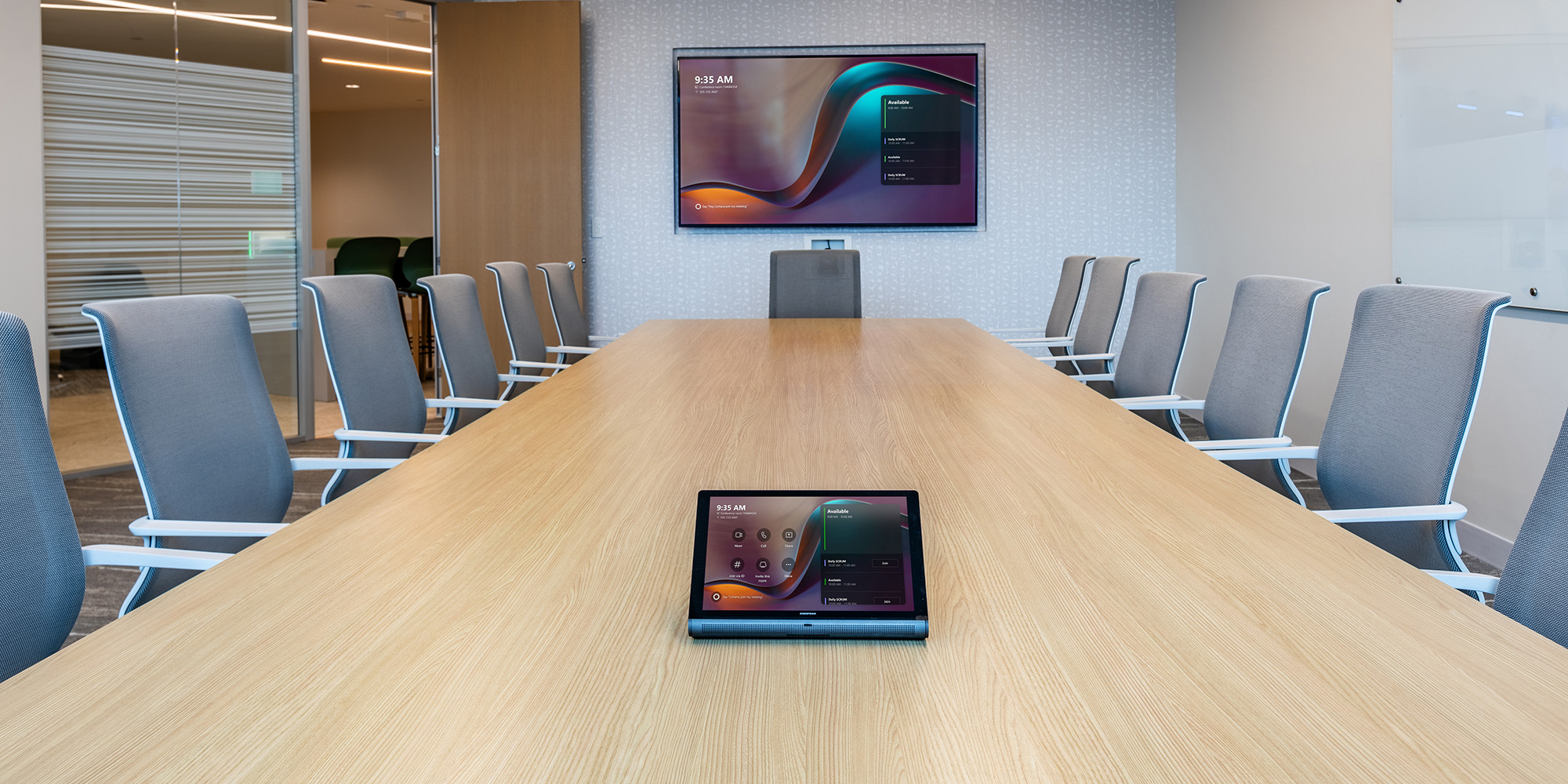
AV control determines whether a meeting room, command center, or campus-wide AV deployment is easy or frustrating to operate. When the top considerations when designing AV control are addressed early, end users walk into a room and start their meeting in seconds, IT teams manage hundreds of endpoints from a single dashboard, and the organization gets consistent performance across every space. When those considerations are skipped, the symptoms are familiar: support tickets, abandoned rooms, conflicting interfaces, and expensive reprogramming.
Designing Intuitive AV Interfaces for End Users
The single most important consideration in AV control design is the end user experience. The people using the system in a meeting room are usually not AV professionals. They expect technology to work without instruction. Designing intuitive AV interfaces means presenting users with the smallest possible number of choices on the home screen. A room interface should make starting a meeting, sharing content, adjusting volume, and ending the session simple. Everything else belongs behind an “advanced” or “settings” menu, accessible to those who need it.
Touch panel control systems are the most common interface format, but the principles apply equally to button panels, voice control, and mobile control. Ford AV’s control systems programmers approach interface design as a user experience discipline. We match interfaces with the room’s usage, validate with those who will use them, and refine them based on feedback.
Planning for Scalability Across Rooms, Buildings, and Campuses
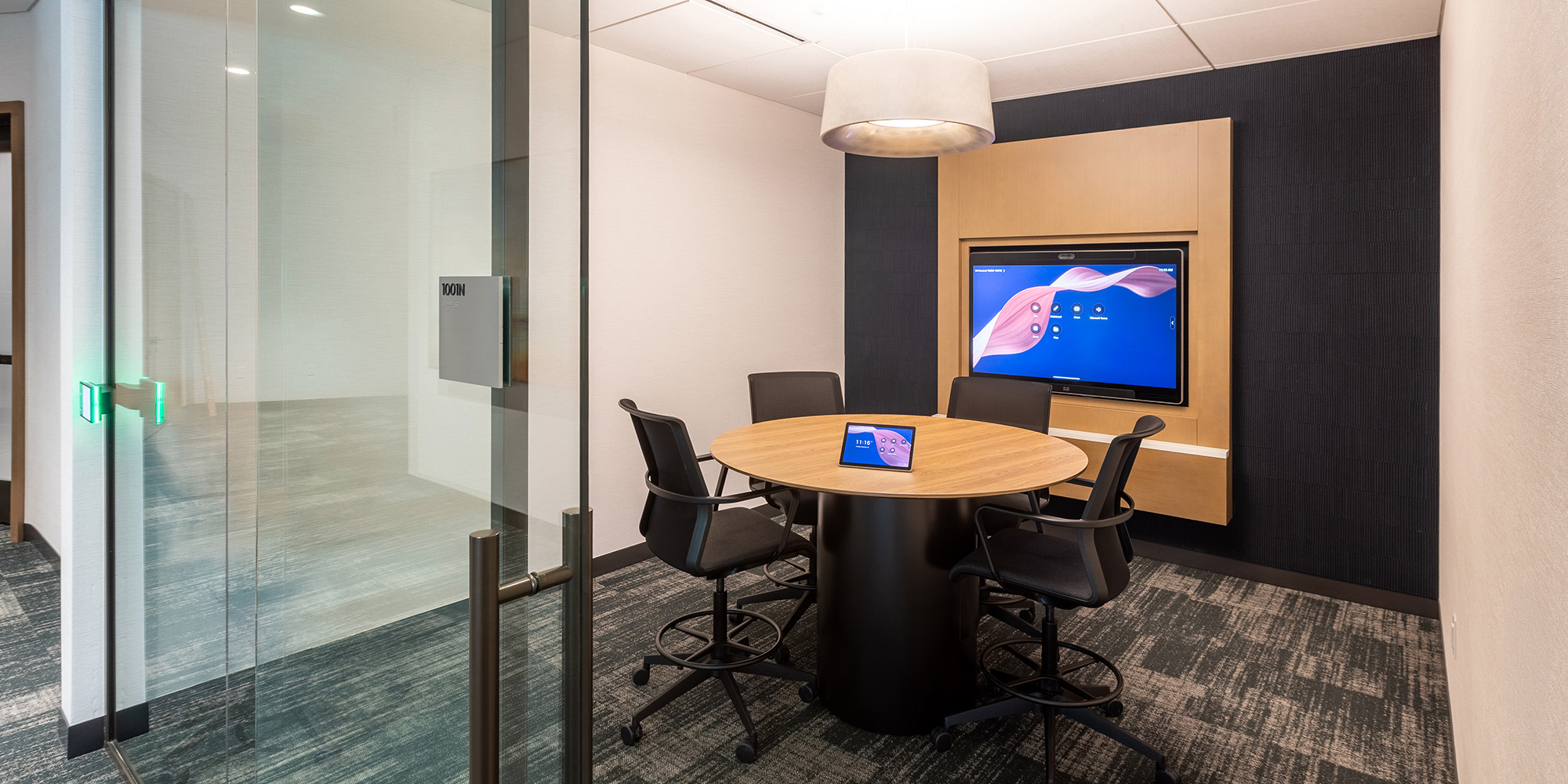
A control system designed for one room is fundamentally different from a control system designed for a hundred rooms. Enterprise AV environments require a scalable architecture, both in endpoints and in the experience users see from room to room.
Scalable AV control system design starts with standardization. When a global enterprise deploys hundreds of huddle rooms, conference rooms, and boardrooms, user interfaces should match. Source selections, control flows, and naming conventions should be identical.
Scalability also depends on the underlying control platform. Enterprise-grade systems from Crestron, QSC Q-SYS, Extron, and AMX support centralized management, remote configuration, and bulk deployment of programming updates. Scalable architecture takes advantage of those capabilities by treating each room as a standard template rather than a custom build. When a change needs to be made, it is shared with every relevant room from a central management platform instead of requiring a technician to visit each space.
Integrating AV Control with IT, Network, and Enterprise Systems
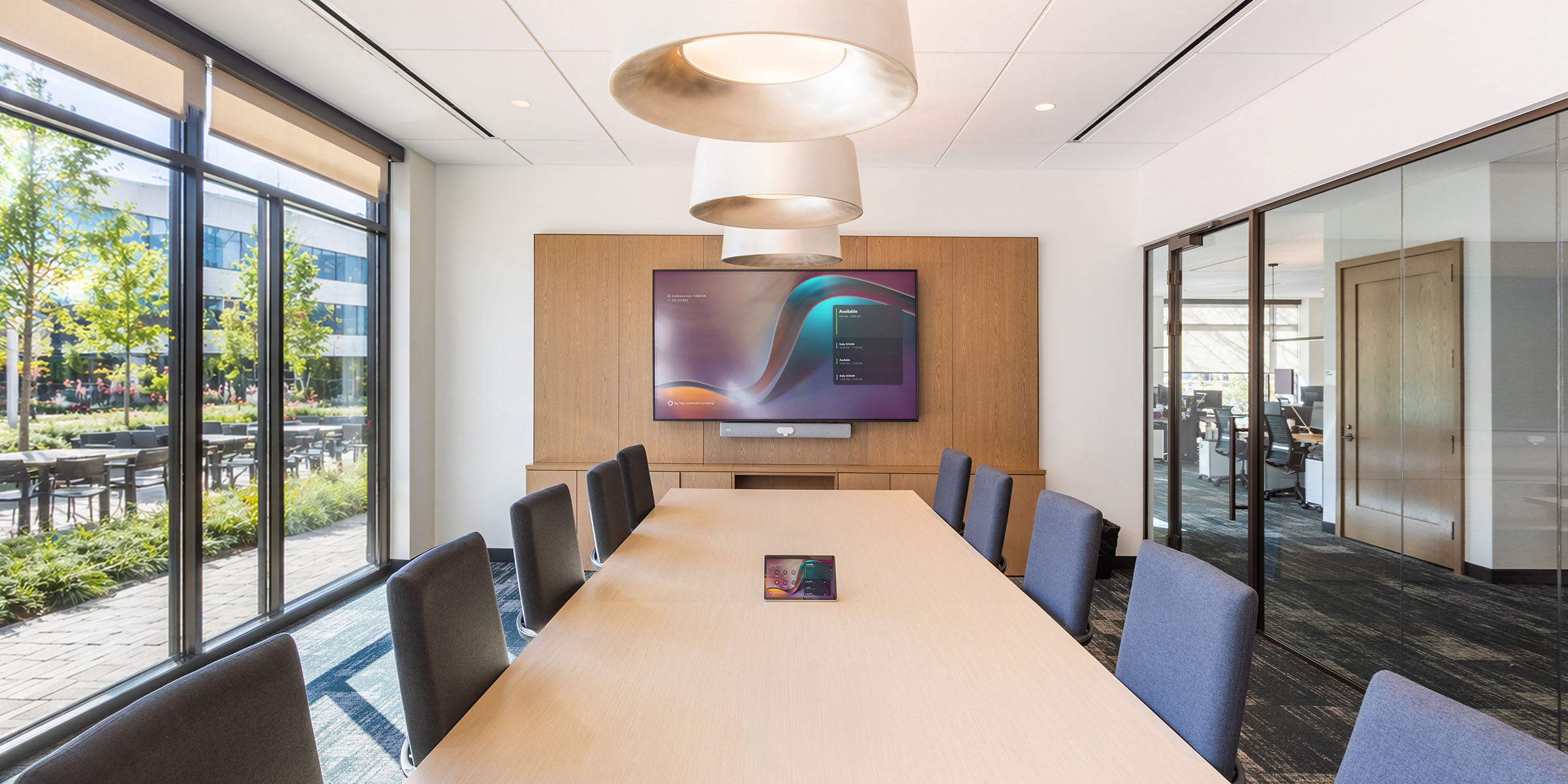
Modern commercial AV control systems live on the corporate network and integrate with the rest of the enterprise technology stack. Calendar systems, identity providers, room scheduling platforms, building management systems, and analytics tools interact with AV control in some form. Designing that integration from the beginning is what separates a connected AV environment from a collection of isolated rooms.
AV automation and control integration also extends to building systems. Lighting scenes, shade positions, HVAC zoning, and even occupancy-based power management can all be tied to AV control to create environments that adjust themselves. Those integrations require careful coordination between AV, IT, and facilities teams. Ford AV designs control systems as enterprise technology, not as standalone room equipment. Our engineers work with client IT, security, and facilities teams to align AV control with the broader technology architecture.
Planning for Long-Term Management and Lifecycle Support
The final consideration determines whether a control system delivers value across its full lifecycle or becomes a liability. AV control systems are not install-and-forget infrastructure. They require ongoing programming updates as conferencing platforms evolve, security patches as vulnerabilities are disclosed, and adjustments as the organization needs to change.
Long-term management starts with documentation. Every control system should be deployed with complete, current documentation of its programming, network configuration, device inventory, and integration points. Lifecycle planning also includes a clear strategy for refreshing cycles. Conferencing platforms change every few years. Hardware reaches the end of support. New collaboration tools emerge. A control architecture designed with modularity in mind allows organizations to refresh individual components without rebuilding the entire system.
Building in Security, Reliability, and Remote Management
Commercial AV control systems are network-connected devices. They are part of the organization’s attack surface and part of its uptime responsibility. AV control system design best practices treat security and reliability as core requirements, not features to add later.
Reliability and remote management are closely related. Enterprise control platforms support remote monitoring of every connected device, automated alerts when something fails, and remote troubleshooting that resolves most issues without dispatching a technician. It also allows organizations to identify failing equipment before users notice.
Our managed services program monitors client AV environments, identifies issues before they become outages, and dispatches local technicians for the rare problem that cannot be resolved remotely. That combination is how organizations get enterprise reliability without building an enterprise AV team in-house.
Best Practices for Centralized AV Control and Automation
Ford AV approaches AV control as a strategic system design discipline rather than a programming task. Our control systems programmers, network engineers, and project managers work together to build environments that are easy to use, easy to manage, and easy to scale. That integrated approach is why organizations trust Ford AV to design the AV control systems that their operations depend on.
Frequently Asked Questions
What are the most important considerations when designing AV control systems?
Key considerations include user experience, system scalability, integration with existing IT infrastructure, reliability, and ease of long-term maintenance. Effective AV control design ensures intuitive operation across all user skill levels.
How do you simplify AV control for end users?
Intuitive UI design, automation of common tasks, preset configurations, and centralized control systems reduce manual input and simplify the process.
Why is scalability important in AV control system design?
Scalable systems allow organizations to expand across multiple rooms, buildings, or campuses without redesigning core infrastructure, ensuring long-term cost efficiency.
How does AV control design impact system performance?
Well-designed control systems improve operational efficiency, reduce user errors, and ensure consistent performance across different environments and use cases.
Partner with Ford AV for Enterprise AV Control Design
- Enterprise AV Control System Design and Integration – Ford AV designs and integrates centralized AV control systems for corporate, higher education, healthcare, and government clients across the country.
- Scalable Standardization for Multi-Site Deployments – Ford AV builds standardized UI templates, programming libraries, and deployment procedures that keep the user experience consistent and the management overhead low.
- Integrated AV, IT, and Network Design – Our engineers design AV control systems as part of the broader enterprise technology stack, with the network segmentation, identity integration, and security controls that modern environments require.
- Managed Services for Long-Term Performance – Proactive monitoring, scheduled updates, security patching, and rapid-response support keep control systems performing across their full lifecycle.
- Trusted by Enterprise, Government, and Education Clients Nationwide – IT leaders, facilities directors, and operations teams rely on Ford AV to deliver AV control systems built for usability, scalability, and long-term value.
Ready to Design or Standardize Your Enterprise AV Control Systems?