
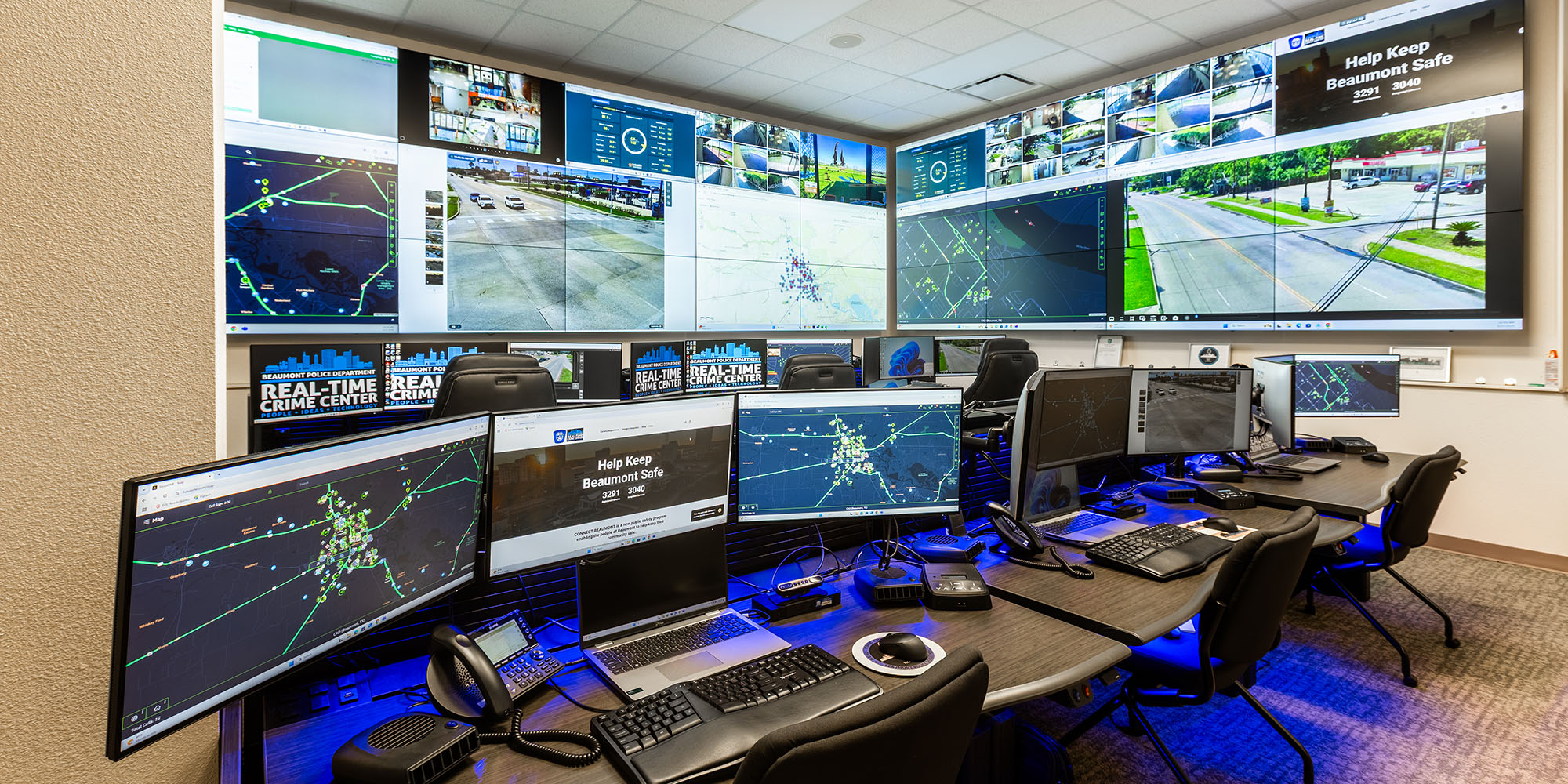
Command centers are operational nerve centers for organizations. When the design is right, operators move quickly and information flows clearly. When the design is wrong, the consequences range from operator fatigue and missed alerts to expensive retrofits. Most of the costly command center design mistakes we see are not the result of bad technology decisions. They are the result of planning gaps that surface long before the first display is mounted.
Mistake #1: Treating the Command Center as a Room Instead of a System
The most frequent command center design mistake is not treating it as an integrated system design. A command center is not a conference room with extra screens. It is an environment where video walls, operator workstations, audio systems, control platforms, network infrastructure, and source systems work together.
The right approach starts with the mission. What does the room need to do? How many operators support it? How will the environment evolve? Those answers drive the architecture, not the other way around. The earlier a qualified integrator is involved in that conversation, the fewer downstream problems the project encounters.
Ford AV engages command center projects as a design-build partner from the earliest planning stages. Our engineers work with architects, operations leaders, and IT teams to translate requirements into infrastructure, room layout, and system architecture. That coordination prevents the costly disconnect between building design and AV system design.
Mistake #2: Skipping Operator Workflow Analysis
Control room ergonomics and workflow are often treated as afterthoughts, which leads to environments where operators struggle to do their jobs efficiently. Workstation placement, monitor arm configurations, line of sight to the video wall, distance between collaborating operators, and traffic flow through the room all affect performance during high-stress events. A room that looks impressive in renderings can still be a difficult place to work.
A proper workflow analysis observes how operators actually work. Which systems do they monitor most often? When do they need to collaborate? What information must be visible at all times versus on demand? The answers shape workstation layout, display sizing, audio zoning, and even lighting design.
Mistake #3: Undersizing or Oversizing the Video Wall
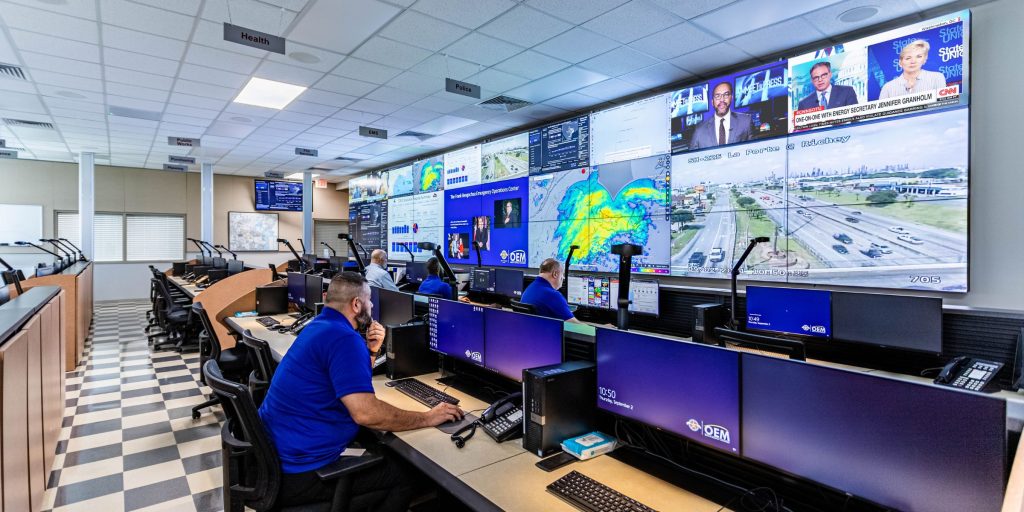
Command center video wall design is one of the areas where mistakes are most visible and most expensive to correct. Two problems are common. The first is undersizing, where the video wall cannot display the information operators need at a readable resolution. The second is oversizing, where the wall is larger than the room can support, leading to wasted pixels, poor sightlines from the back of the room, and unnecessary capital expense.
The correct video wall size is a function of viewing distance, source resolution, content density, and the number of simultaneous information layers operators need to see. Direct-view LED (dvLED) has become the preferred video wall in mission-critical environments because it eliminates seams, supports finer pixel pitches at larger sizes, and offers longer service life.
Ford AV brings experience in command center video wall design and direct-view LED integration. We model viewing distances, content density, and resolutions before specifying displays and provide vendor-agnostic recommendations across leading dvLED and processing platforms.
Mistake #4: Underestimating the Network, IT, and Cybersecurity Infrastructure
Modern command centers run on networked AV, and the network is where many projects encounter their largest gaps. Treating the network as a separate IT scope handled after the AV design is complete almost always creates problems.
Common command center technology planning mistakes in this area include flat network designs that mix AV traffic with general office traffic, insufficient bandwidth for uncompressed or lightly compressed video streams, lack of redundancy, and inadequate provisioning for future growth. Cybersecurity is also important. Proper command center technology planning includes device authentication, encrypted communications, network segmentation, role-based access control, secure remote management, and a clear patching strategy for AV endpoints.
Ford AV designs the AV system, network, and security as a single integrated solution. Our engineers build segmentation, redundancy, and cybersecurity controls into command center designs. We work alongside client IT and security teams to align with internal policy and compliance requirements.
Mistake #5: Designing for Today Instead of Tomorrow
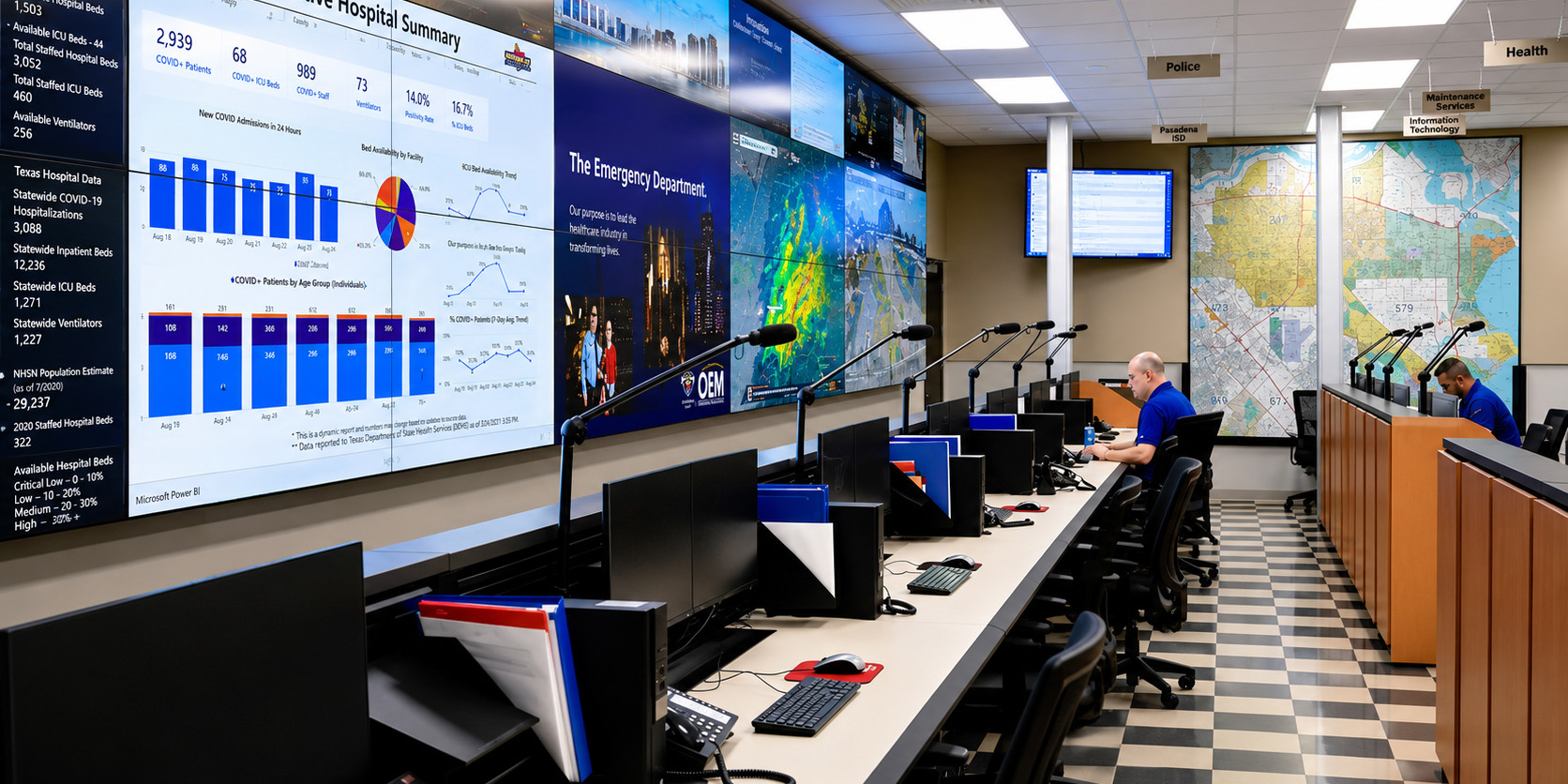
Command centers have long lifecycles. The infrastructure installed today often needs to support technology that does not yet exist. Many projects fail by designing for current requirements only, leaving no room for growth in display count, operator positions, source systems, or processing capacity. The cost of building extra capacity during initial construction is a fraction of the cost of expanding later, but it requires deliberate planning.
Scalable command center technology planning means building conduit and cable pathway capacity beyond current need, sizing the equipment room for expansion, and specifying control and processing platforms that support additional endpoints. It also means thinking about service and support across the room’s lifecycle.
Ford AV supports deployments with managed services that include proactive monitoring, preventive maintenance, and rapid on-site response. Operations leaders rely on Ford AV to keep them performing at peak reliability long after the initial deployment is complete.
Best Practices for Command Center AV System Design
The pattern across all of these mistakes is the same. Successful command centers include operational analysis, integrated system design, and disciplined product selection, programming, and support planning. Skipping or compressing any of these phases is where the costliest problems originate.
Ford AV approaches command center projects as integrated design-build engagements rather than equipment installations. Our certified engineers, control systems programmers, and project managers work alongside operations leaders, IT teams, and architects to develop requirements, model workflows, design video walls and audio systems for the specific environment, build the network and control infrastructure, and support the room across its lifecycle.
Command Center Frequently Asked Questions
What is the biggest mistake when designing a command center?
One of the most common mistakes is failing to plan for scalability, workflow efficiency, and future technology growth during the initial design process.
Why is AV integration important in command centers?
Integrated AV systems improve communication, situational awareness, and operational efficiency by connecting video walls, operator workstations, collaboration tools, and monitoring systems into one unified environment.
What cybersecurity considerations apply to command center AV systems?
Modern command centers rely heavily on network-connected AV and monitoring technologies. Organizations should evaluate device authentication, encrypted communications, network segmentation, access control policies, and secure remote management capabilities.
Why is operator workflow analysis important during the design phase?
Understanding how operators interact with systems, displays, and communication tools helps designers optimize workstation placement, display visibility, collaboration zones, and traffic flow.
Partner with Ford AV for Command Center Design
- Enterprise Command Center and Control Room Integration – Ford AV designs and integrates AV systems for transportation agencies, public safety organizations, utilities, government facilities, and enterprise clients across the country.
- Proven Video Wall and DvLED Expertise – From command center video wall design to direct-view LED installations, Ford AV delivers display systems for continuous operation, optimal viewing, and long-term reliability.
- Integrated Control Systems and Programming – Custom control systems programming consolidates complex AV, IT, and communication platforms into intuitive operator interfaces.
- Secure AV-Over-IP and Network Design – Ford AV builds the network and IT infrastructure that mission-critical AV systems require, with segmentation, redundancy, and cybersecurity practices appropriate for high-stakes environments.
- Managed Services for Mission Critical Environments – Preventive maintenance, remote monitoring, and rapid-response support keep command centers operating at peak performance long after deployment.
Ready to Design or Upgrade Your Command Center?