
Hotels and hospitality venues are more than places to stay. They are destinations where guests gather, attend events, meet, dine, relax, and experience a brand. The right hospitality AV technology helps create those experiences while making spaces easier for staff to manage.
Summary
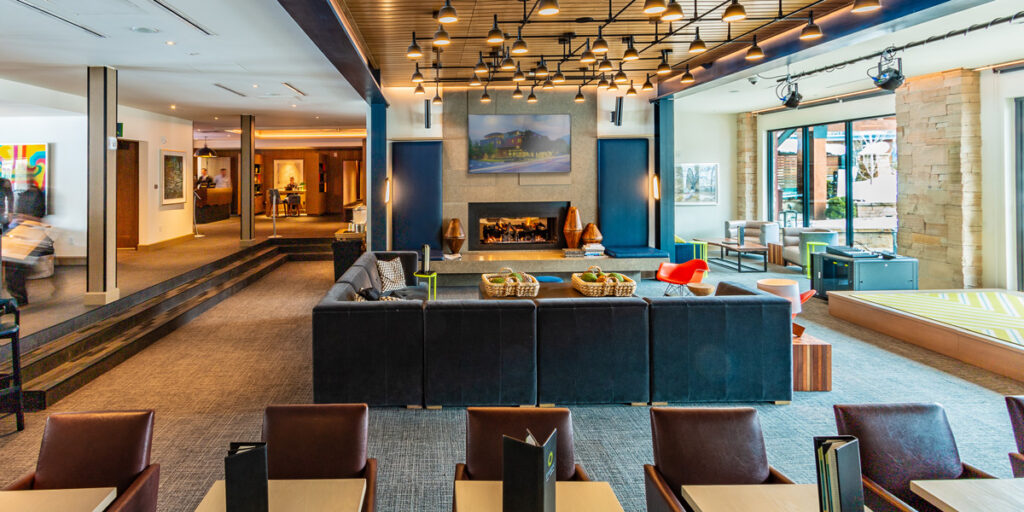
Modern hospitality AV solutions connect the guest experience across lobbies, meeting rooms, event spaces, restaurants, guest areas, and other public spaces. Digital signage and wayfinding help guests navigate the property, meeting room technology supports conferences and events, and integrated audio, video, lighting, and control systems help create a consistent experience throughout the venue.
What is hospitality AV?
Hospitality AV includes the audiovisual systems that help hotels, resorts, casinos, conference centers, and event venues communicate with guests, support meetings and events, and create the atmosphere of a space. These systems can range from hotel digital signage and background audio to conference room AV, video displays, room scheduling, wayfinding, lighting control, and centralized system management.
The goal is not simply to add more technology. Effective hospitality audiovisual systems should make the property easier to navigate, easier to operate, and more engaging for guests while supporting the staff responsible for keeping the venue running.
Hospitality AV technology: what makes the difference?
Every property has different requirements, but successful hospitality AV designs typically connect several technologies to support the guest journey and daily operations.
4. Property-wide communication
Distributed audio, digital signage, displays, and communication systems can help keep guests and staff informed across multiple areas of a property.
The most effective systems are designed around how people actually use the property. Technology should support the experience rather than become another obstacle for guests or staff.
Hotel digital signage: more than a display
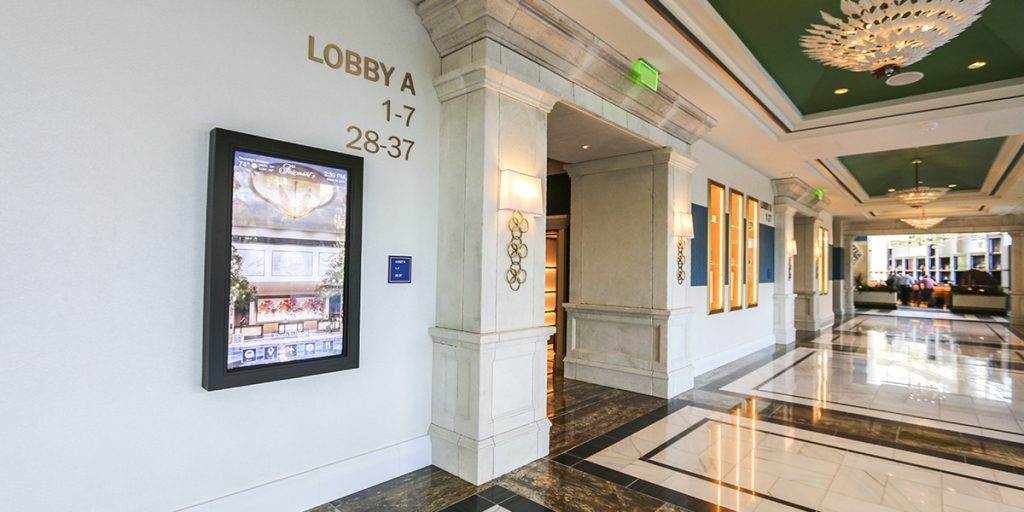
Digital signage can turn static information into a flexible communication system throughout a hotel or hospitality venue. Lobby displays can welcome groups and promote amenities, while screens near meeting rooms can display schedules and event information.
Digital wayfinding can also help visitors find meeting rooms, restaurants, event spaces, and other destinations without relying entirely on printed signs or staff directions. Because digital content can be updated centrally, changes to schedules or information can be reflected across the property without replacing physical signage.
Hotel conference room AV for meetings and events
Meeting and event spaces are an important part of many hospitality properties. Corporate meetings, conferences, weddings, training sessions, and private events can all require different combinations of audio, video, presentation, and collaboration technology.
Hotel conference room AV can include large-format displays, projection, microphones, speakers, video conferencing cameras, wireless content sharing, room scheduling, and control systems. Designing these technologies together allows rooms to support different event formats without requiring a completely different workflow for every user.
Designed for flexible hospitality spaces
A ballroom may host a conference in the morning, a luncheon at midday, and a wedding reception in the evening. Hospitality AV systems should be flexible enough to support those changing requirements while remaining simple for staff and event users.
Make the guest experience easier with integrated control
Hospitality technology works best when guests and staff do not have to think about how the system works. Integrated control can bring audio, video, displays, lighting, and other room functions together through an intuitive interface.
For meeting and event spaces, touch panels or mobile control interfaces can simplify common tasks such as selecting a presentation source, adjusting volume, controlling displays, or starting a video conference. Standardized control also makes it easier for staff to operate multiple rooms across a property.
Centralized monitoring can extend that visibility beyond an individual room. Hospitality teams can monitor connected AV systems, identify issues, and provide support without having to be physically present at every location.
Create a destination with technology that works together
A successful hospitality environment is not defined by a single display or sound system. It is the combination of technology, architecture, content, and service that shapes how guests experience the property.
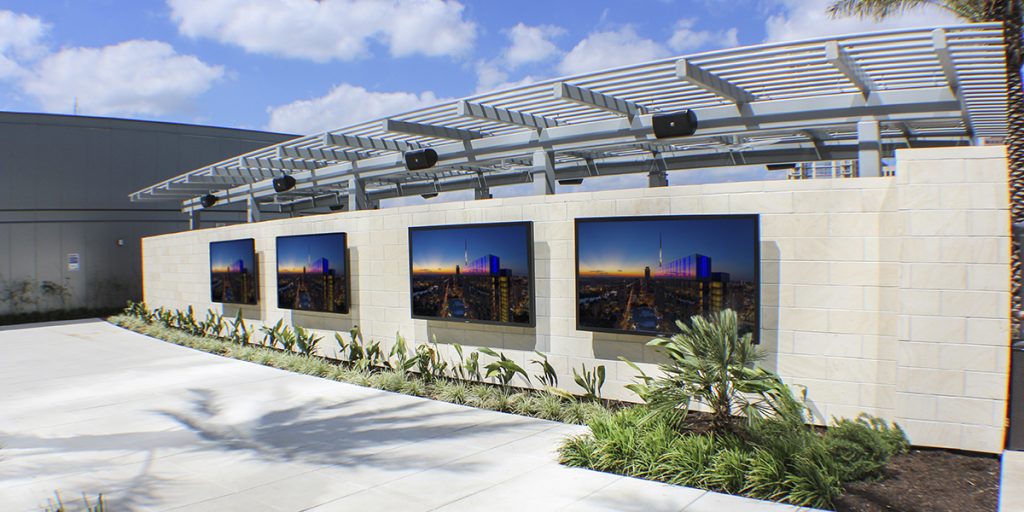
At the Fairmont Austin Hotel, for example, Ford AV integrated digital signage and wayfinding displays, virtual kiosks, room scheduling panels, lobby projection, outdoor displays, touch-panel and iPad control, distributed audio, and elevator displays. The result was an AV environment designed around the hotel’s different guest-facing and event spaces.
That same approach can scale to hotels, resorts, casinos, conference centers, and other hospitality venues. Instead of treating each technology as a separate system, an integrated AV design considers how guests move through the property and how staff manage it every day.
Plan your hospitality AV system around the guest journey
Before designing or upgrading a hospitality AV system, consider how technology will support guests, staff, event planners, and property operations:
- Where do guests need information when they first arrive?
- How will visitors find meeting rooms, event spaces, restaurants, and other destinations?
- What types of meetings, conferences, and events will the property host?
- Can meeting and event spaces adapt to different room configurations?
- Can staff operate the AV systems without extensive technical training?
- How will digital signage and other guest-facing content be updated?
- Which systems need centralized monitoring or ongoing support?
- How will the AV infrastructure scale if the property expands or technology changes?
Planning these requirements early helps ensure the technology supports the property instead of limiting what each space can do. Explore Ford AV’s entertainment and hospitality AV solutions to see how integrated technology can support hotels, resorts, casinos, event spaces, and other hospitality environments.
Frequently asked questions
What is hospitality AV?
What AV systems do hotels typically use?
How does digital signage improve the hotel guest experience?
What is hotel conference room AV?
Can hospitality AV systems support multiple spaces?
Ready to Create a Destination?
Ford AV designs, installs, and supports hospitality AV systems for hotels, resorts, casinos, conference centers, and entertainment venues nationwide. With more than 50 years of AV experience, our team can help connect the technology across your property.
Keep Reading
Entertainment & Hospitality AV Solutions
Explore integrated AV technology for hotels, resorts, casinos, and entertainment venues.
Fairmont Austin Hotel
See how Ford AV integrated AV technology throughout a major hospitality property.
Limelight Hotel
Explore a hospitality AV project supporting guest experiences and live entertainment.