
In high-stakes environments like public safety departments, defense organizations, and emergency operations centers (EOCs), split-second decisions save lives and protect critical infrastructure. Achieving this level of precision requires more than just high-end hardware. It requires sophisticated government command and control center AV solutions that transform streams of raw data into actionable intelligence.
Understanding how AV solutions improve government command centers is the first step toward building a truly resilient operational hub. When technology is integrated into the workflow, operators focus on maintaining real-time situational awareness technology and coordinating responses to threats.
Enhancing Decision-Making with Command Center Video Wall Systems
Rather than a collection of screens, data converges into a coherent picture on command center video wall systems. This visualization allows for a “common operating picture,” ensuring every stakeholder sees the same information at the same time.
Effective integration goes beyond pixel density. It’s about the ability to manipulate data in real-time. During a shift, an operator might need a balanced grid of various inputs. During an active crisis, the system must allow for an instantaneous shift in priority. High-resolution LED or LCD technology ensures every data point and spreadsheet remains legible, reducing eye strain and cognitive fatigue. By creating a flexible visual environment, agencies can ensure no critical detail is lost.
Unified Communications and Secure Audio Distribution
While the video wall gets the most attention, clear and reliable audio is the true backbone of effective disaster coordination. During an emergency, the ability to hear a field report with crystal clarity or conduct a secure teleconference with federal partners is a matter of mission success. Secure government AV systems must include audio processing that eliminates background noise and ensures every word is captured and transmitted without latency or interference. This requires a sophisticated Digital Signal Processing (DSP) architecture that can manage multiple audio “zones” within a single room.
Integrating audio paths into a unified communications platform allows for interoperability between radio frequencies, VoIP phone systems, and video conferencing. This ensures a command center director can address first responders while also briefing a governor on a separate, encrypted line. By prioritizing high-fidelity audio distribution alongside visual data, mission-critical AV integration provides a toolkit for leaders to manage the flow of information without the risk of communication breakdown.
The Foundation of Mission-Critical AV Integration
Reliability is a fundamental requirement. Mission-critical AV integration is designed around the philosophy that there is no “off” switch for public safety. In a command center, a black screen or a dropped audio feed represents a dangerous security blind spot. To prevent this, these systems are built with redundancy, ensuring that if a signal processor or power supply fails, a backup takes over so quickly that the operator never even notices the transition.
The rise of network-based threats has made secure government AV systems a top priority for IT and facility leaders. Modern AV architecture must meet strict encryption standards, ensuring sensitive video feeds and communication channels remain shielded from unauthorized access. This involves all the AV hardware, software management layer, and network distribution work to maintain the agency’s data integrity.
Scalable AV Design for Government Control Rooms
As populations grow and digital threats become more complex, the facilities tasked with managing them must be able to adapt without requiring a total overhaul. The best AV systems for emergency operations centers are those that anticipate change rather than react to it. Historically, adding a new workstation or an extra display might have required weeks of rewiring and downtime. Today, a scalable AV design for government control rooms utilizes AV-over-IP, which allows agencies to expand their footprint using standard network architecture.
This is a massive advantage for long-term budgeting and taxpayer ROI. By moving away from rigid, proprietary hardware and toward a software-defined infrastructure, government agencies can “stack” new capabilities as they become available. Whether it is integrating new AI-driven analytics or expanding the visual wall to accommodate a larger team, a future-ready system ensures that the initial investment remains relevant and powerful for a decade or more, rather than becoming obsolete after a few years of service.
Proven Performance: Command Centers in Action
City of Beaumont: Real-Time Crime Center (RTCC)
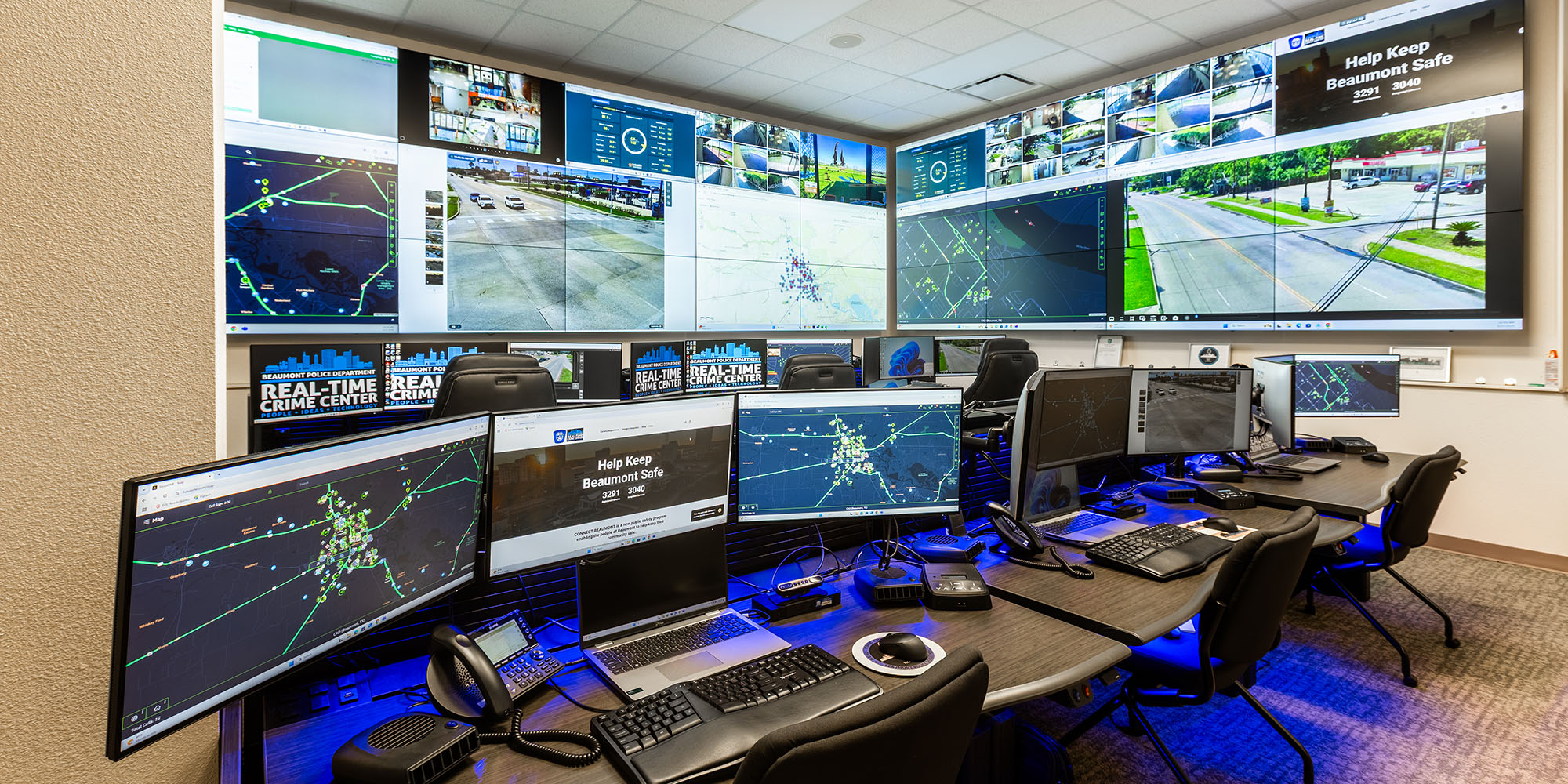
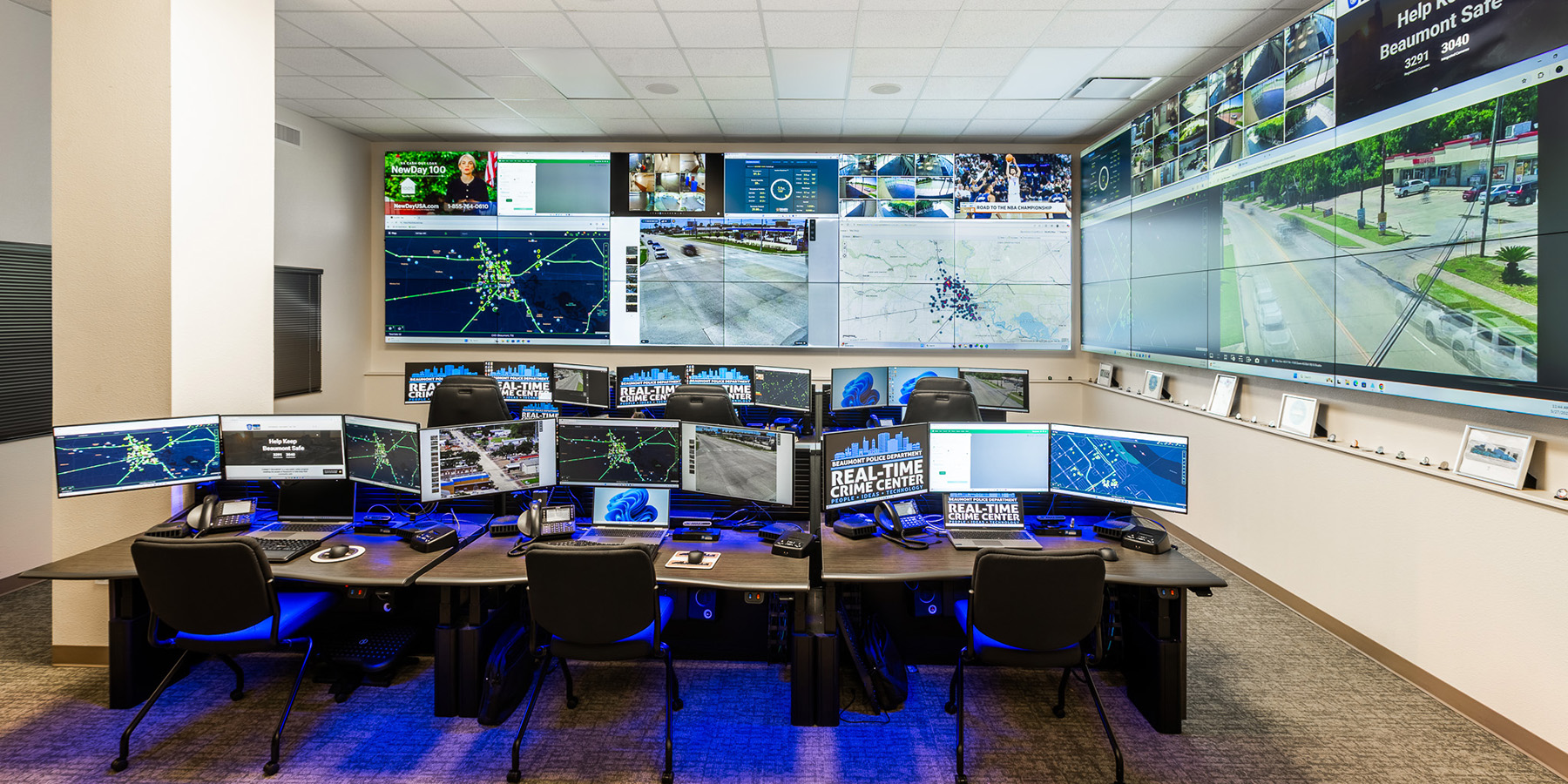
Ford AV transformed an existing municipal space into a high-tech intelligence hub. This center aggregates traffic cameras and license plate readers across two massive video walls, one in a 3×6 configuration and another in a 3×4. This integrated visual environment allowed analysts to identify and recover stolen vehicles in under an hour.
Williamson County: Emergency Services Operations Center
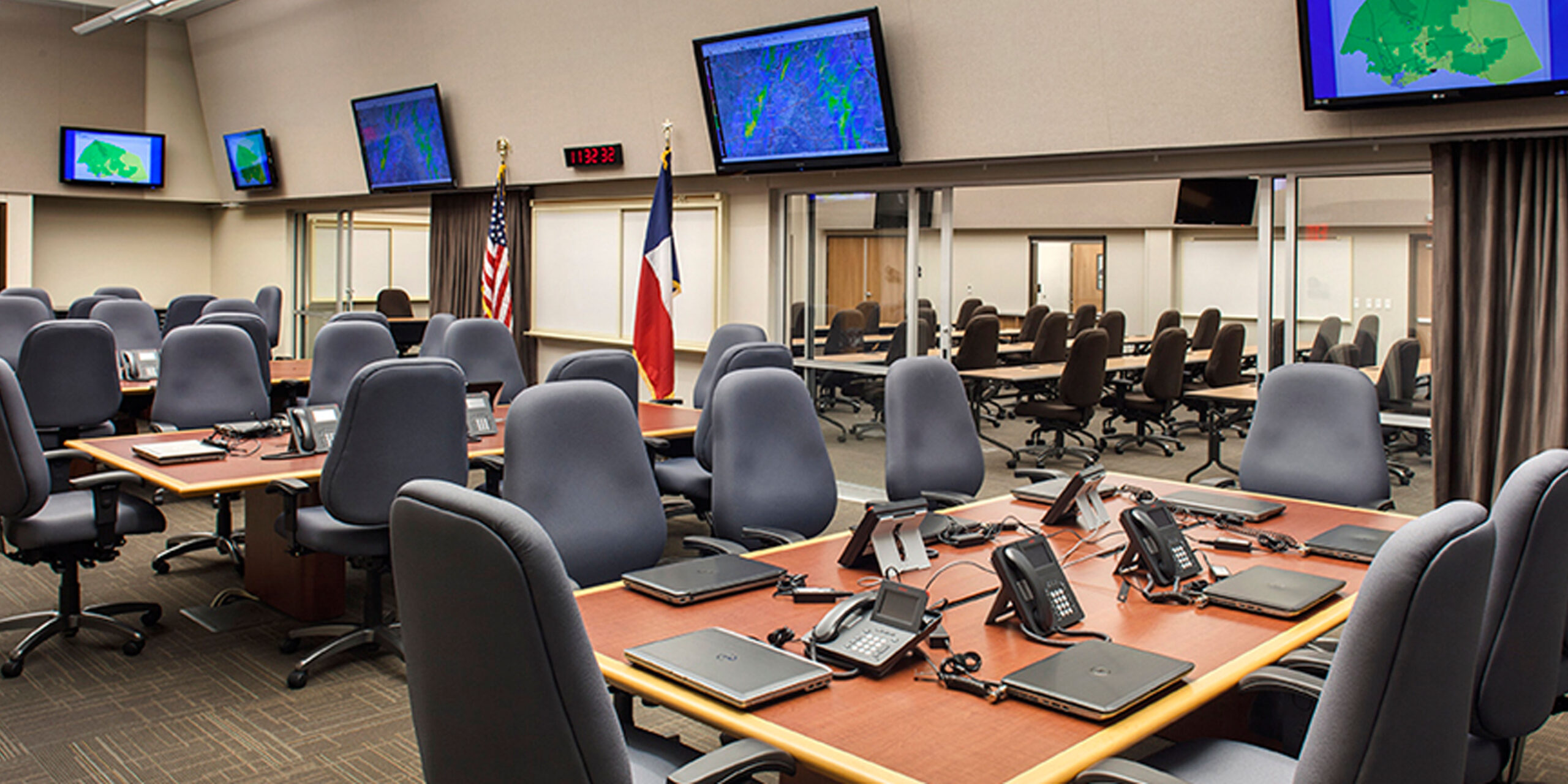
Williamson County Emergency Services Operations Center required a facility that could operate under extreme conditions. This includes a 72-hour off-grid capability and EF5 tornado hardening. Ford AV integrated the 911 Call Center with wall-mounted displays and overhead audio distribution. The EOC meeting space features projection and touchpanel control systems.
City of Grand Prairie: Emergency Operations Center
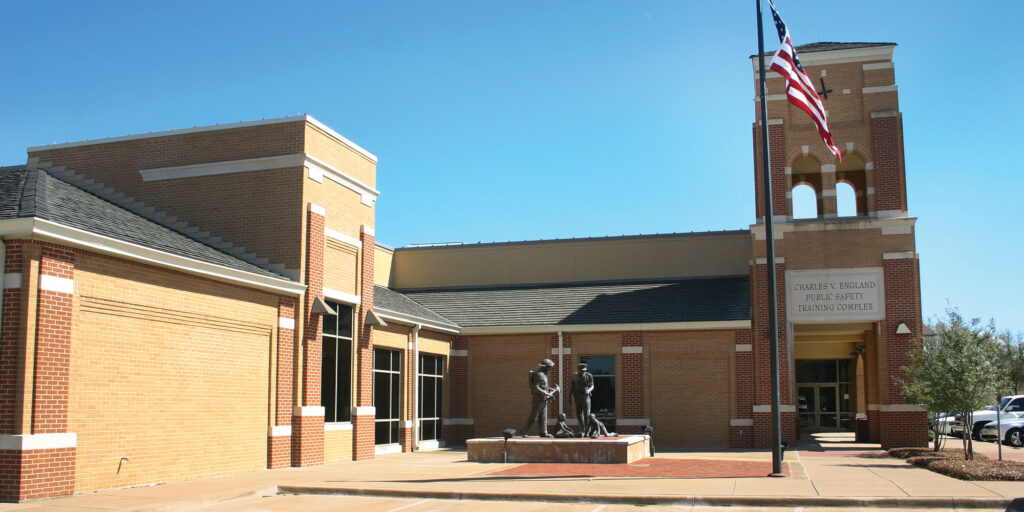
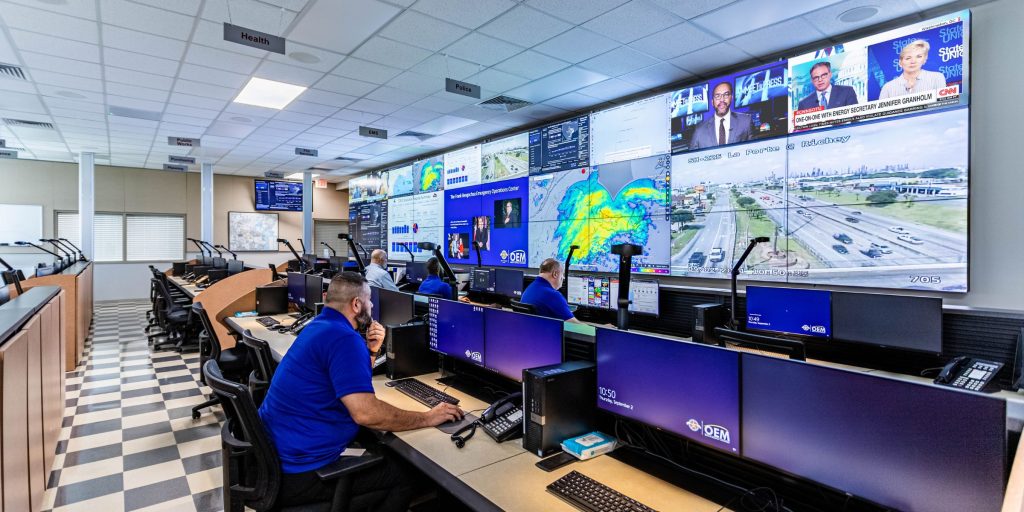
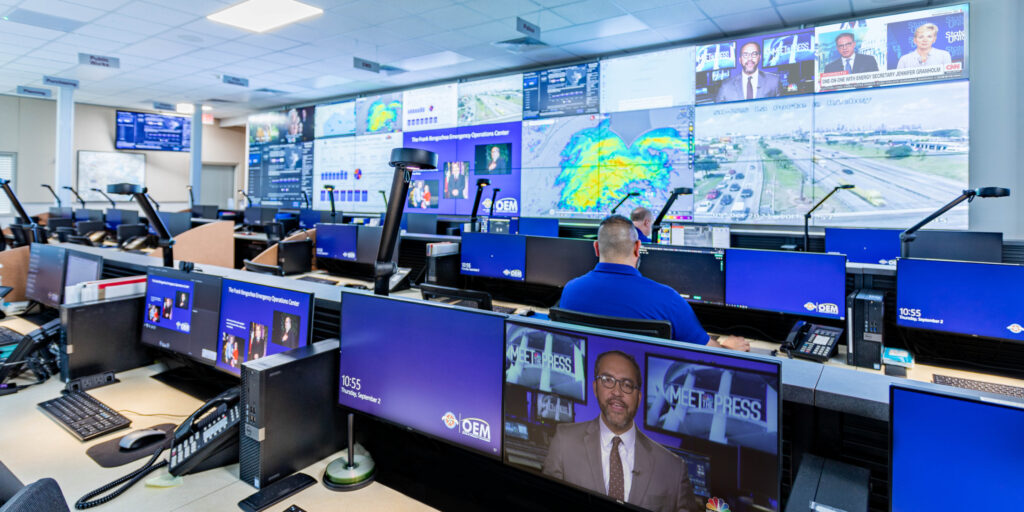
The City of Grand Prairie required a solution that could manage a high volume of information. Ford AV implemented a video system capable of viewing 10 different sources, from national news to local traffic cameras. With custom touchpanel controls and video conferencing, this system pivots from daily monitoring to crisis management with a single touch.
City of Pasadena: Emergency Response Unit
Serving the City of Pasadena, Ford AV deployed a 40-foot video wall for their emergency response unit. This massive canvas allows for extreme flexibility in how data is displayed. Whether the team is monitoring a large-scale public event or responding to a natural disaster, they have the clarity needed to make informed decisions.
The Ford AV Advantage
Navigating the intersection of government procurement, high-level security requirements, and complex technical integration requires a partner with a proven track record. At Ford AV, our Design Build process is specifically tailored to the unique operational demands of the public sector. From the initial consulting phase to our ongoing Managed Services, we provide the end-to-end expertise needed to deploy government command and control center AV solutions that perform when the stakes are at their highest. Learn how Ford AV designs and integrates secure, mission-critical AV systems for government command and control centers.
Government Command and Control Frequently Asked Questions
What AV technology is essential for government command and control center AV solutions?
Essential solutions include high-resolution command center video wall systems, redundant signal processing, secure communication platforms, and centralized control systems that enable real-time monitoring and decision-making.
How do AV systems improve situational awareness in emergency operations centers?
Emergency operations center AV systems improve situational awareness by consolidating multiple data feeds, live camera streams, mapping systems, and communication channels into a single visual environment for faster response and coordination.
What makes AV integration mission-critical in government environments?
Mission-critical AV integration ensures system redundancy, cybersecurity compliance, 24/7 reliability, and interoperability between surveillance, communication, and data visualization.
How should agencies plan scalable AV design for government control rooms?
Agencies should prioritize modular infrastructure, expandable video wall systems, centralized management software, and network architecture to support growth and evolving operational demands.
Why is system redundancy important in command center AV systems?
Redundancy minimizes downtime by ensuring backup power, signal paths, and processing systems are in place, allowing continuous operations during emergencies or equipment failures.

- 50+ Years of Mission-Critical Excellence – Ford AV has spent over five decades designing and integrating technology.
- Nationwide Engineering, Local Response – With regional offices across the U.S., we provide the local service and technical support necessary to maintain government operations.
- Unified AV/IT & Security Integration – We specialize in converging audio-video, IT networks, and security protocols into a single command center platform.
- Scalable, Future-Ready Infrastructure – Our designs allow government agencies to expand their operational footprint and adopt new data analytics without costly overhauls.
Transform your command and control center with systems designed for total situational awareness, absolute reliability, and rapid decision-making. Fill out the form below to connect with Ford AV’s government specialists and begin your mission-critical integration.
Let’s Get Started!