
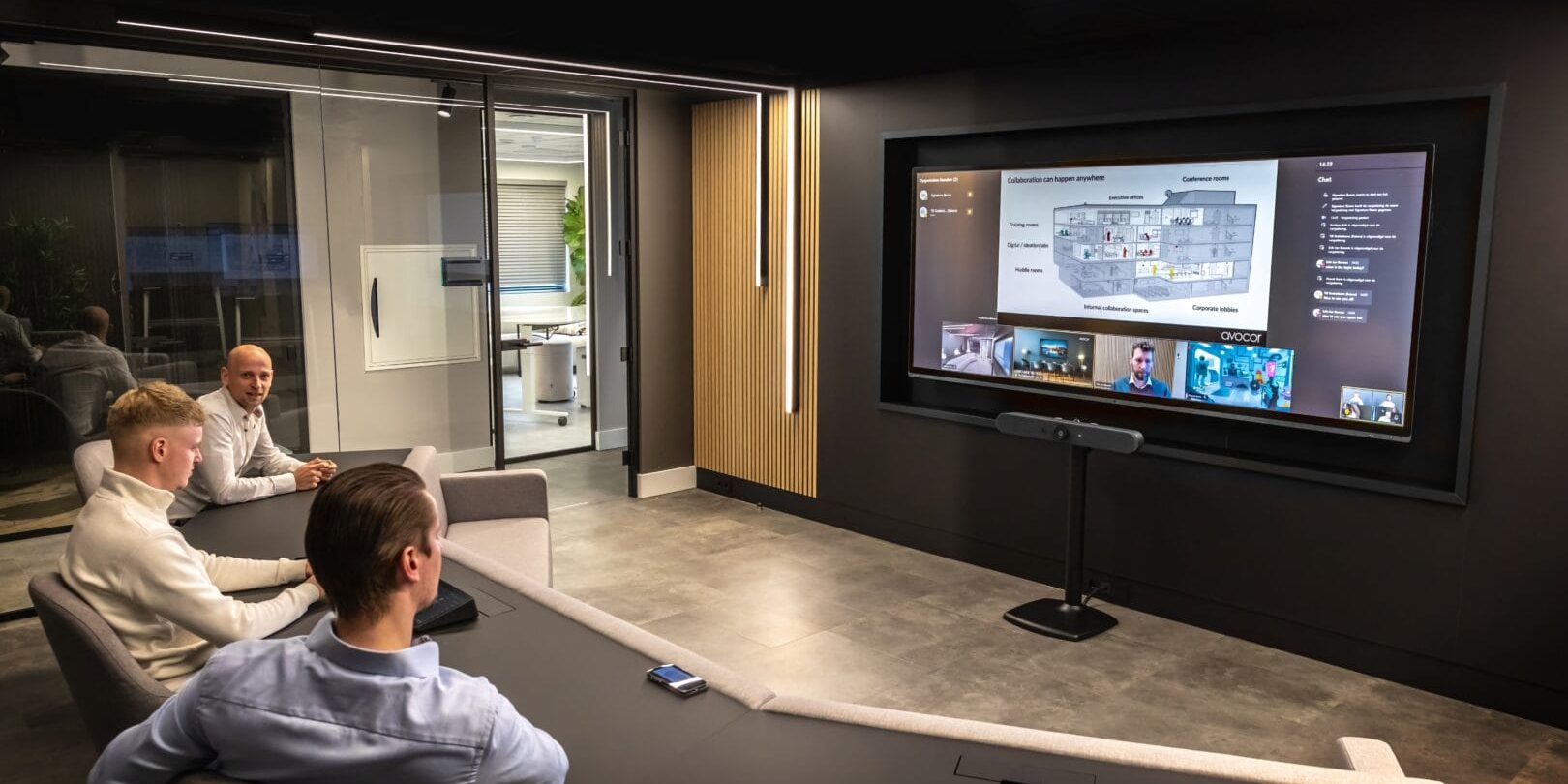
Video conferencing plays an essential role in today’s workplace. What was once reserved for occasional meetings is now the primary way many teams collaborate, present ideas, and make decisions. As expectations for hybrid meetings have grown, so have the limitations of traditional video conferencing spaces.
Immersive video rooms address those challenges. Rather than treating video conferencing as a standalone technology, these rooms bring together displays, cameras, audio, lighting, and control systems to create a more natural and engaging experience for both in-room and remote participants.
What Is an Immersive Video Room?
An immersive video room is a space intentionally designed to make remote participants feel present and actively involved, rather than faces on a screen. The goal is not to add complexity, but to reduce the sense of distance that often exists in virtual meetings.
Unlike standard conference rooms that simply add a camera and display to an existing space, immersive video rooms are planned holistically. Every element, from screen placement to lighting, supports eye contact, natural conversation, and visual clarity. When done well, technology fades into the background, allowing people to focus on communication instead of controls.
Designing Video Rooms for Face-to-Face Interaction
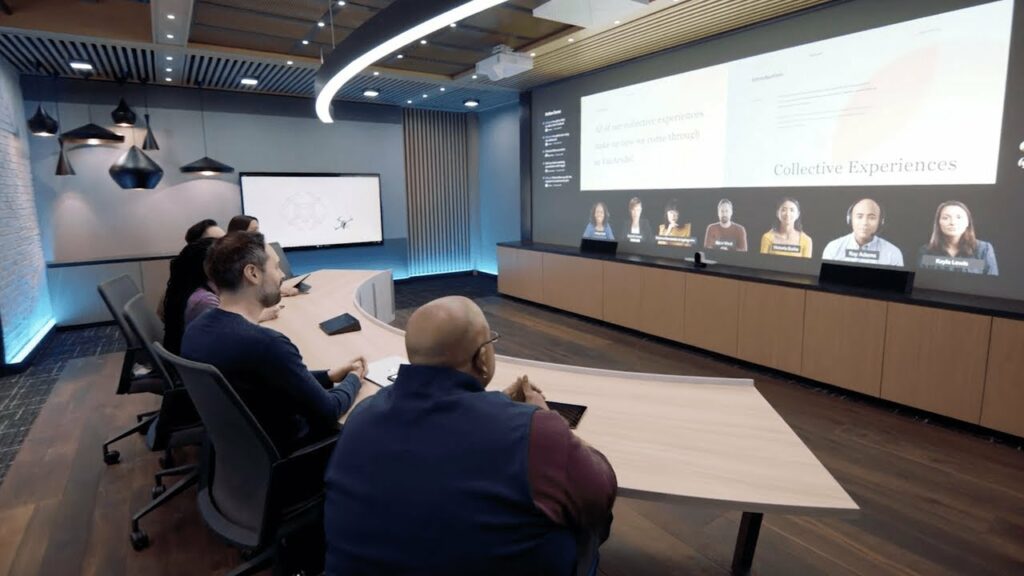
One of the most important differences between immersive video rooms and traditional conference spaces is the room orientation. Immersive video rooms recreate the feeling of sitting across the table from others, rather than viewing them from the side or at a distance.
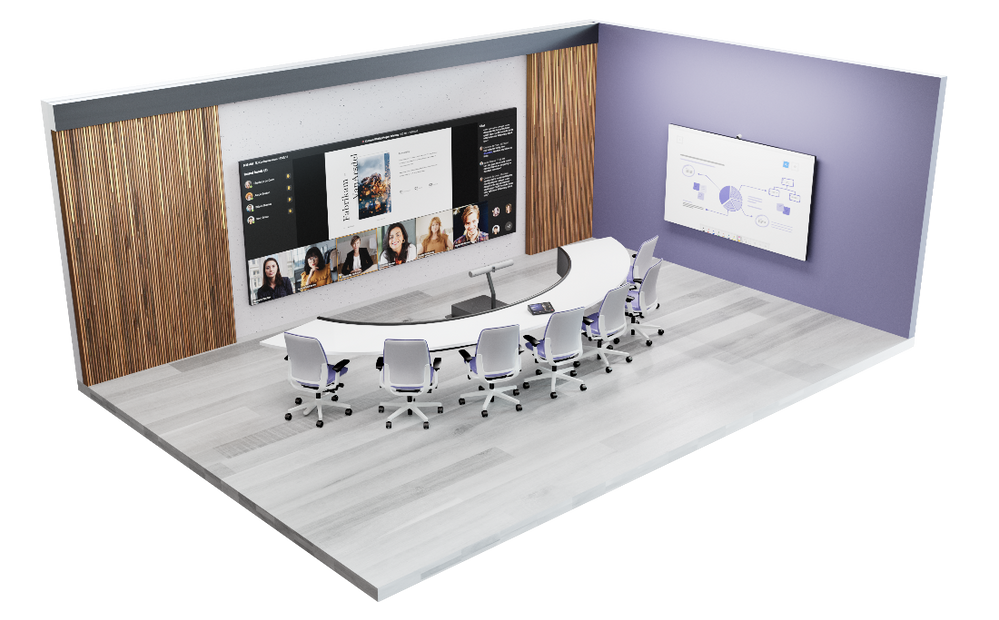
Instead of seating participants on both sides of a conference table, immersive layouts typically position in-room participants on one side of the table facing a video wall. The cameras capture clear, forward-facing views of everyone in the room while presenting remote participants at a natural, life-size scale. The result is a more comfortable and engaging experience for both in-room and remote attendees.
Displays are often installed along the longer wall of the room rather than the shorter wall. The wider visual field allows multiple remote participants to appear at eye level and in proper proportion. This reinforces the sense of presence and makes conversations feel more balanced and inclusive. By aligning room layout, display scale, camera placement, and seating orientation, immersive video rooms create meetings that feel less like watching a screen and more like sharing a space.
Displays and Cameras in Immersive Video Conferencing Rooms
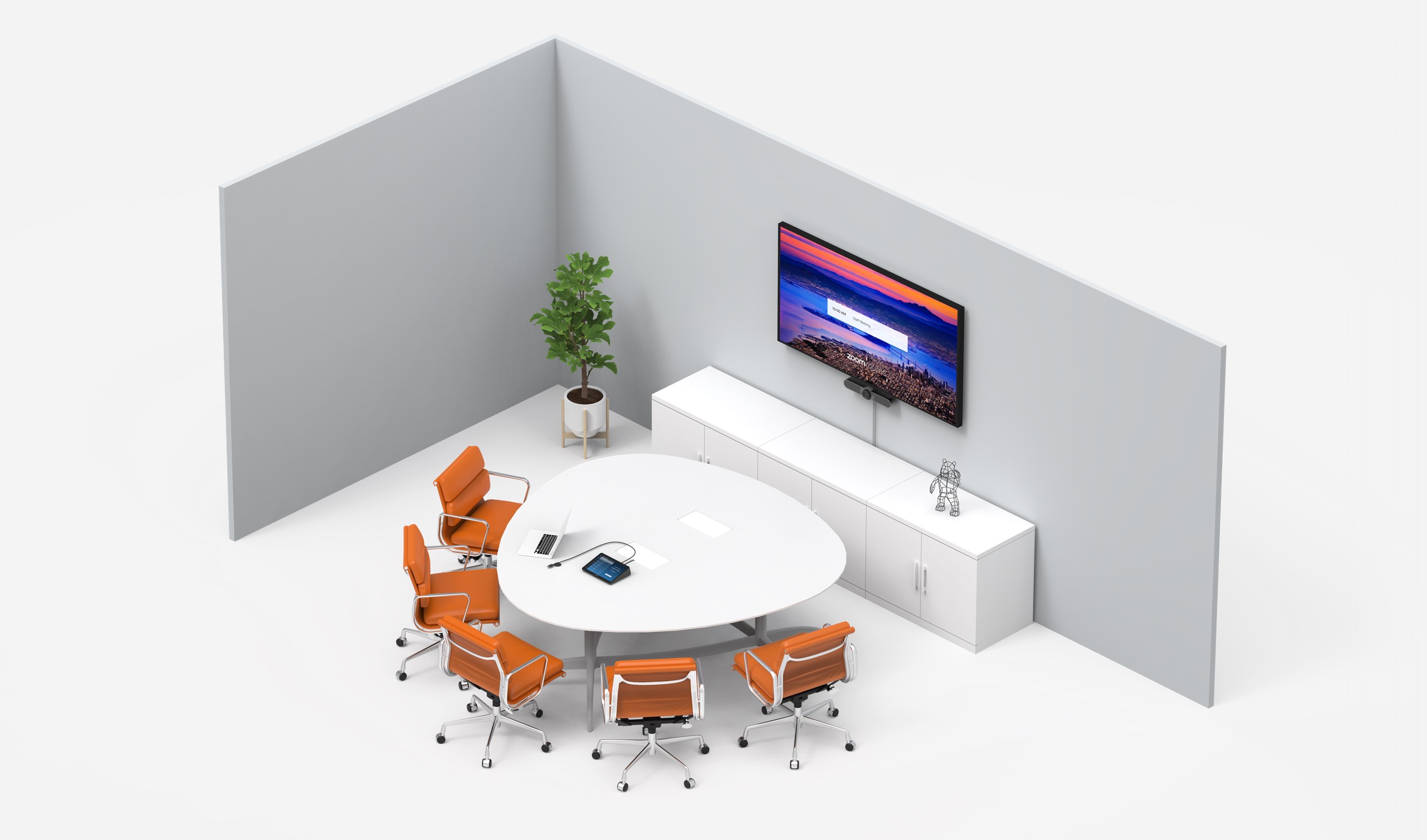
Visual presence is a defining element of immersive video conferencing. Large-format displays or multi-display configurations give remote participants a realistic sense of scale, helping conversations feel more balanced and natural.
Camera placement is just as important. Eye-level cameras that align with displays support natural sightlines and create the feeling of eye contact. Advanced camera technologies can automatically frame speakers or adjust views based on room activity. This reduces the need for manual control and helps meetings flow more smoothly. When visual elements are thoughtfully designed, the experience feels less like watching a screen and more like sharing a space.
Audio Design for Conference Rooms
Clear, intelligible audio is essential to immersion. In immersive video rooms, microphones and speakers work together, and voices sound natural and evenly distributed throughout the space.
Instead of forcing participants to speak toward a single microphone or raise their voices, professional audio systems capture speech consistently and play it back at comfortable levels. This reduces cognitive strain and allows conversations to feel more spontaneous and inclusive, regardless of where participants are seated.
Lighting Designed for Video
Lighting plays a critical role in how people appear on camera and how content is perceived on displays. In immersive video rooms, lighting is designed specifically for video, not just for general room illumination.
High-quality LED lighting with accurate color rendering helps ensure natural skin tones and consistent visuals. Evenly distributed light reduces harsh shadows and glare, improving both on-camera appearance and in-room comfort. Lighting integrated into the overall AV design supports the visual experience without drawing attention to itself.
Integrated Control for Immersive Video Conferencing Systems
One of the defining features of immersive video rooms is simplicity from the user’s perspective. In professionally designed spaces, a unified control system integrates lighting, audio, video, and conferencing platforms. This allows meetings to start quickly and run smoothly.
With a single touch, users can launch a meeting, adjust the room for collaboration or presentation, and trust that the technology will respond appropriately. Rather than managing multiple remotes or interfaces, users interact with the room as a cohesive system. The result is a more intuitive experience where technology supports the meeting instead of slowing it down.
When Standard Video Conferencing Rooms Reach Their Limits
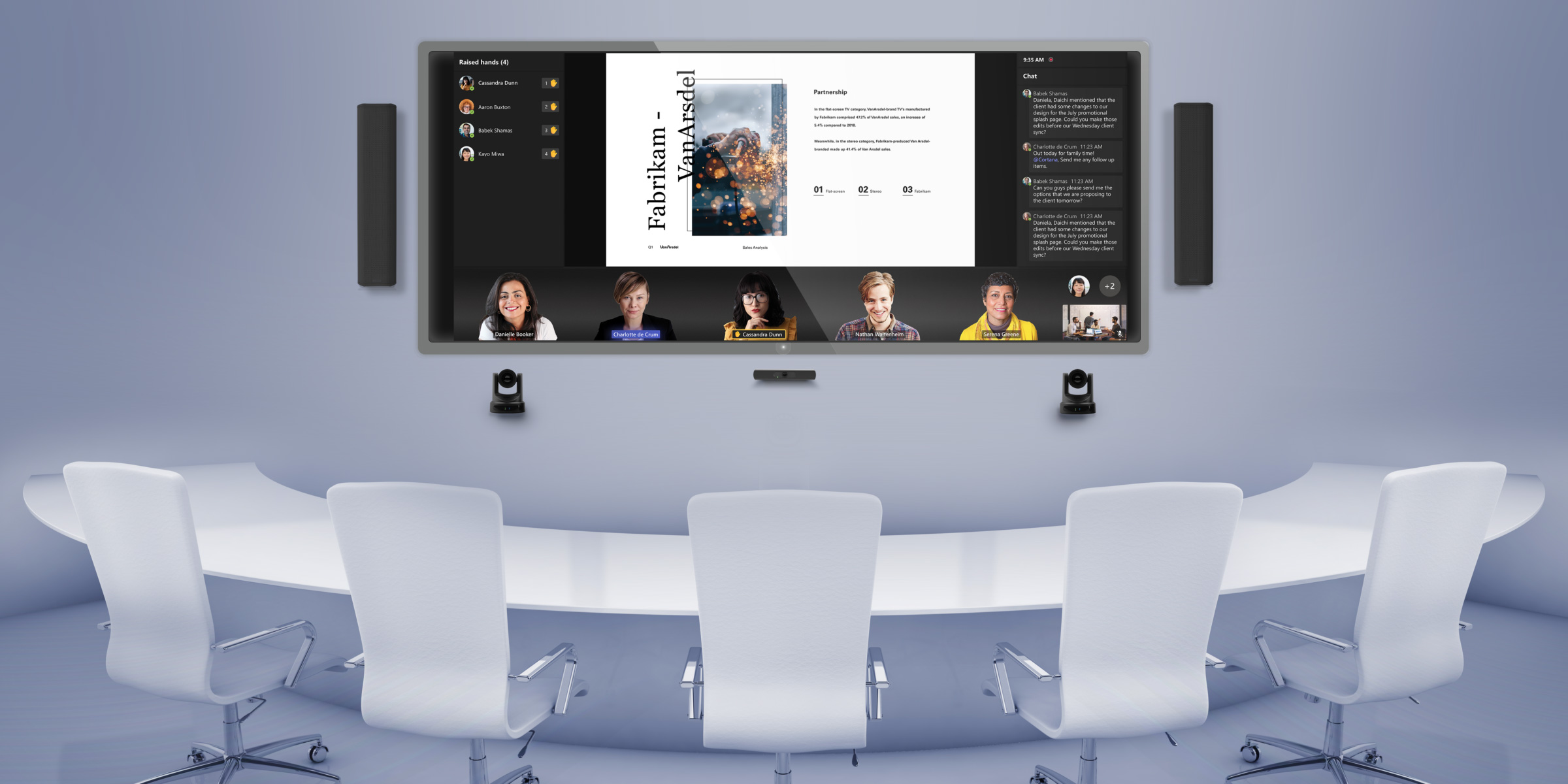
Standard video conferencing rooms continue to play an important role in day-to-day collaboration and are often the right solution for many meeting spaces. However, as organizations rely more heavily on hybrid meetings, some use cases demand a higher level of engagement and visual presence than traditional room designs were originally intended to support.
In rooms that were not purpose-built for video, camera placement, display size, audio coverage, and lighting can create subtle barriers to communication. Remote participants may feel less connected, and in-room users may need to work harder to stay engaged. Immersive video rooms address these challenges by aligning technology and room design around how people naturally communicate.
The Value of Professional AV Integration
Creating an immersive video conferencing experience requires more than selecting high-quality components. It requires an understanding of how systems interact and how design choices affect the user’s experience over time. Experienced AV integrators like Ford AV take a holistic approach by aligning displays, cameras, audio, lighting, and control systems into a unified environment. By designing immersive video rooms as complete systems rather than collections of products, they help organizations create reliable, intuitive, and scalable spaces.
When immersive video conferencing systems are designed with intention, meetings feel more natural, participants stay engaged, and distance becomes less of a barrier.
Immersive Video Frequently Asked Questions
What is the difference between an immersive video room and a standard video conferencing room?
A standard video conferencing room typically adds a camera, microphone, and display to an existing space. An immersive video room is designed holistically around the video experience. It considers room orientation, display placement, camera sightlines, audio coverage, lighting, and control as a unified system. The result is a more natural, engaging experience where remote participants feel present rather than secondary.
Do immersive video rooms work with Microsoft Teams, Zoom, or other platforms?
Yes. Immersive video conferencing systems are typically platform-agnostic and can support Microsoft Teams Rooms, Zoom Rooms, Cisco Webex, Google Meet, and other enterprise collaboration platforms. A professional AV integrator ensures the room design and technology align with your preferred platforms and workflows.
Is immersive video conferencing more difficult to use?
No. In fact, immersive video rooms are designed to feel simpler from the user’s perspective. Integrated control systems allow users to start meetings, adjust room settings, and transition between use cases with minimal interaction. The complexity is handled behind the scenes through thoughtful system design and integration.

- Decades of AV Integration Expertise – Over 50 years designing, integrating, and supporting immersive video conferencing environments for enterprise collaboration.
- Local Service, National Reach – Nationwide support with local technicians for immersive room deployment, system tuning, upgrades, and ongoing maintenance.
- Experience-Driven Room Design – Ford AV designs immersive video rooms that align displays, cameras, audio, lighting, and control systems.
- Scalable, Platform-Agnostic Solutions – Our immersive video conferencing systems work across platforms and grow with your organization.
Ready to elevate your hybrid meetings with immersive video conferencing? Fill out the form below to connect with Ford AV’s experts in immersive video rooms and enterprise collaboration environments.
Let’s Get Started!