
50+
Years of AV Integration
950+
AV Brands Supported
24/7
Service & Support
16
Nationwide Offices
Protecting Patient Conversations
Thin exam room walls, open nurse stations, and busy corridors make it easy for private patient information to be overheard—putting HIPAA compliance and patient trust at risk. Ford AV designs and installs sound masking systems, acoustic treatments, and integrated AV that reduce speech intelligibility between spaces.
- Confidential conversations stay inside the room
- Designed around FGI acoustic guidelines
- Reduced risk of incidental PHI disclosure
- Documented performance for compliance records
- One standard across every department and campus
From single clinics to multi-campus health systems, we work alongside your architects, facilities teams, and compliance officers as part of a layered privacy strategy.
Why Healthcare Facilities Need a Speech Privacy Standard
Most speech privacy gaps trace back to acoustics that were never designed as part of the room, only added after complaints or a compliance review.
The Problem
The Ford AV Standard
Conversations carry through exam room walls and doors.
Sound masking tuned to the speech frequency range in every clinical space.
Nurse stations and open corridors expose PHI to passersby.
Zoned masking calibrated to each area’s activity and ambient noise.
Behavioral health rooms need extra acoustic protection.
Enhanced masking and acoustic treatment for the most sensitive spaces.
Telehealth calls are audible in waiting areas and hallways.
Integrated audio design keeps virtual visits contained to the room.
Privacy is inconsistent department to department, site to site.
A standardized speech privacy spec deployed system-wide.
No documentation to show auditors or risk teams.
Acoustic testing and reporting to support HIPAA risk assessments.
How Does Sound Masking Work?
Speech privacy is the ability to hold a confidential conversation without being understood outside the room. Sound masking is the technology most often used to achieve it: a soft, engineered background sound—similar to gentle airflow—broadcast through ceiling-mounted or in-plenum speakers, tuned to the frequency range of human speech. It doesn’t block conversations; it makes them unintelligible beyond the intended space.
Sound masking works alongside architectural sound isolation—wall construction, doors, and ceiling assemblies—not in place of it. Ford AV designs both together as one system.

Sound Masking
Ambient sound engineered to the speech spectrum, delivered through ceiling speakers.

Zoned Control
Masking levels set and adjusted independently by room, department, or floor.

Adaptive Masking
Systems that respond in real time to ambient noise, rising and falling automatically.

Acoustic Treatment
Wall, door, and ceiling recommendations that work with masking, not around it.
Where Speech Privacy Matters Most
Every department carries a different level of privacy risk. Ford AV designs masking coverage and zoning around how each space is actually used.
Highest Risk
Exam & Consultation Rooms
Masking tuned to FGI-referenced sound levels keeps diagnosis and treatment conversations inside the room.
Open Plan
Nurse Stations & Corridors
High-traffic areas where handoffs and phone conversations happen in earshot of patients and visitors.
Most Sensitive
Behavioral & Mental Health Suites
These rooms call for the highest masking levels alongside enhanced wall and door construction.
Virtual & Intake
Telehealth & Registration Areas
Virtual visits and intake conversations often happen steps from a waiting room. Integrated audio keeps both sides private.
Administrative
Billing & Administrative Offices
Insurance, billing, and HR conversations carry the same disclosure risk as clinical ones.
Not sure where your privacy gaps are?
Our team will visit your site and recommend a coverage plan.
Built Around HIPAA and FGI Acoustic Guidelines
HIPAA’s Privacy Rule requires covered entities to use reasonable safeguards against incidental disclosure of protected health information—including conversations overheard in hallways, waiting rooms, and exam areas. The Facility Guidelines Institute (FGI) publishes the industry-standard acoustic criteria that many states reference in healthcare building codes, including sound isolation and speech privacy targets for exam rooms, patient rooms, and behavioral health spaces.
- Designed around HIPAA’s requirement to reduce incidental PHI disclosure
- Coverage referenced to FGI sound isolation and speech privacy criteria
- Post-installation testing and documentation for compliance records
- One privacy standard applied consistently across every department
This page is provided for general informational purposes and does not constitute legal or compliance advice. Consult your organization’s compliance officer and acoustic consultant to confirm requirements for your facility.
Integrated Speech Privacy Technology
Speech privacy works best when it’s engineered alongside the rest of your facility’s technology, not bolted on afterward.
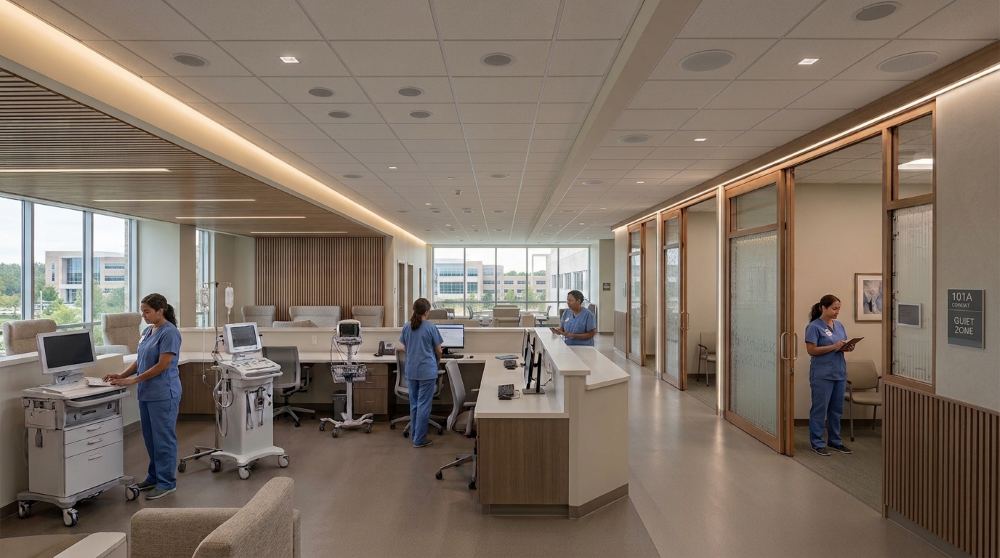
Sound Masking Systems
Direct-field and plenum masking speakers, networked for zone-by-zone tuning.
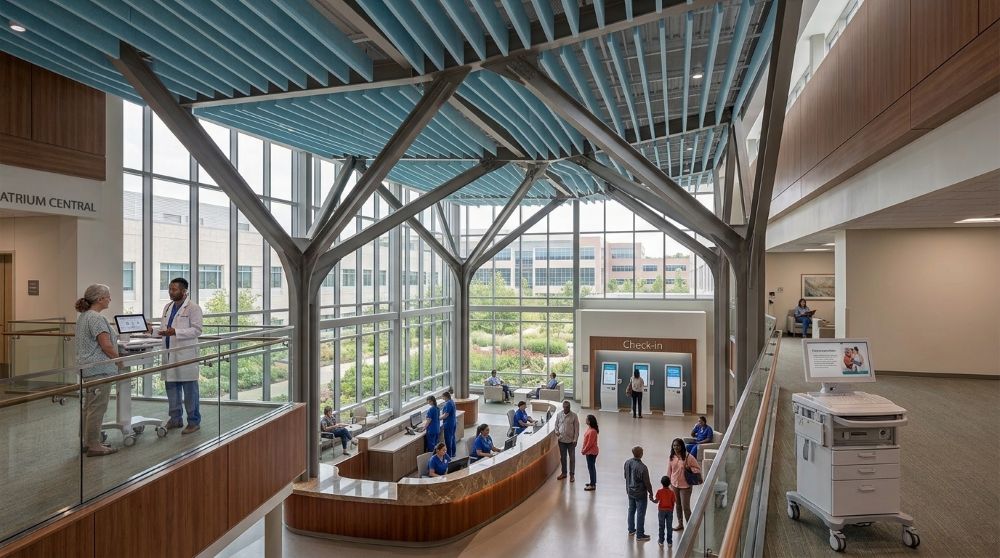
Acoustical & Architectural Recommendations
Wall, door, and ceiling recommendations coordinated with your architect.
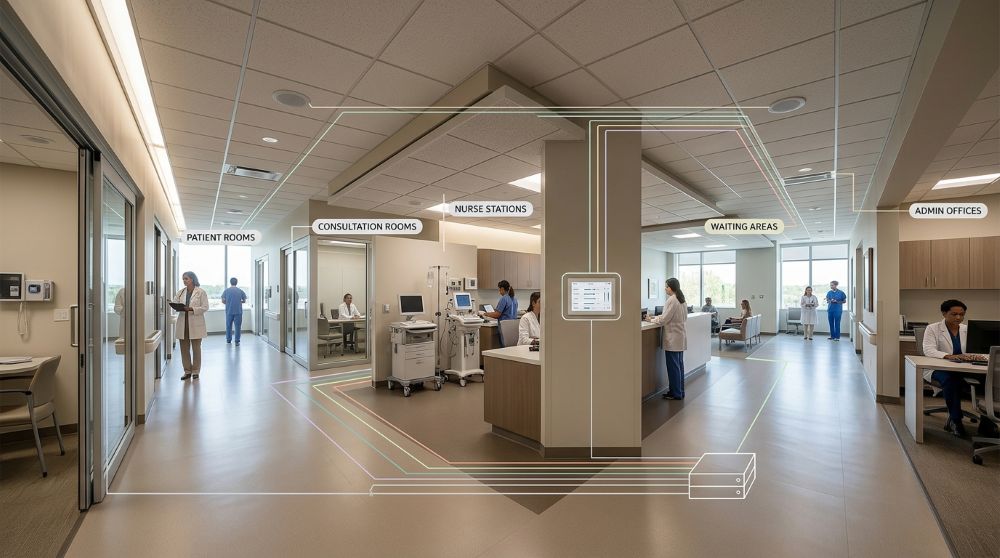
Networked Zone Control
Centralized management of masking levels across rooms, floors, or campuses.
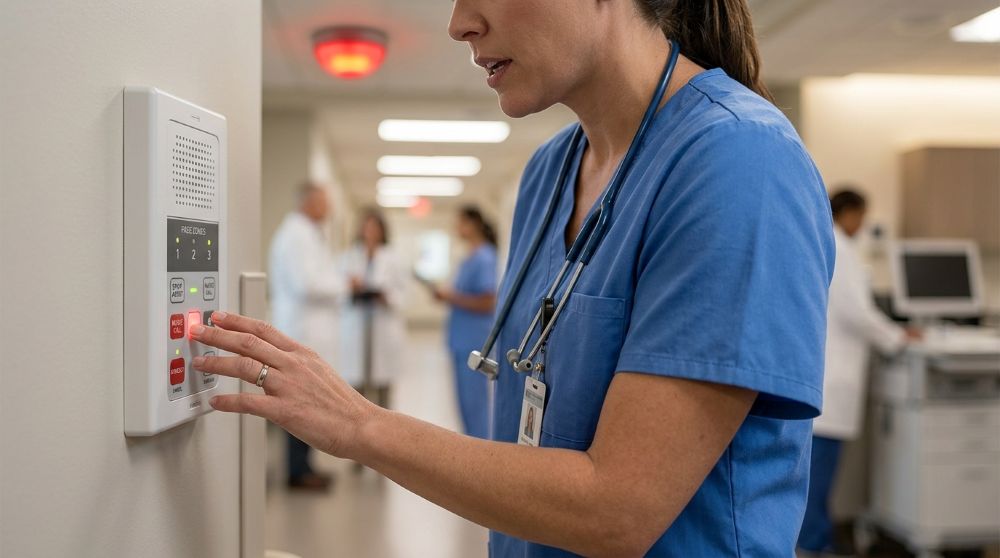
Paging & Nurse Call Integration
Masking systems that share infrastructure with paging, notification, and nurse call.
Leading Sound Masking & Audio Brands We Integrate

Ford AV Speech Privacy Solution Process
From first walkthrough to long-term service, we manage the whole process alongside your facilities, compliance, and design teams.
01
Acoustic Assessment
We evaluate wall construction, ceilings, room adjacencies, and ambient noise to find where privacy is at risk in your facility.
02
System Design & Zoning
Coverage, speaker placement, and zoning designed room by room, referencing FGI acoustic criteria.
03
Installation & Calibration
Technicians install and precisely tune each zone to the correct masking level—effective, but never noticeable.
04
Testing & Documentation
Post-installation measurements documented for your facilities and compliance records.
05
Ongoing Support
Remote monitoring and service keep masking tuned as spaces and layouts change.
Why Healthcare Organizations Choose Ford AV
Ford AV has supported healthcare AV and acoustic privacy projects for hospitals, clinics, and health systems nationwide—from single-site clinics to enterprise programs spanning hundreds of exam rooms.
Healthcare-Specific Expertise
Deep experience designing around clinical workflows, HIPAA, and FGI acoustic guidelines.
Enterprise-Ready Standards
One documented privacy standard that scales consistently across every facility.
Single-Source Integration
Masking, AV, paging, and control systems designed and installed as one coordinated project.
Nationwide Support
24/7 service and remote monitoring keep masking systems tuned long after installation.
Healthcare Speech Privacy FAQs
Answers to the questions we hear most from facilities, compliance, and IT teams evaluating speech privacy solutions.
What is sound masking and how does it protect patient privacy?
Does sound masking alone make a facility HIPAA compliant?
Where should sound masking be installed in a healthcare facility?
Can sound masking integrate with our existing paging or nurse call system?
Will patients and staff notice the sound masking?
Can an existing facility be retrofitted with sound masking?
Contact Ford AV
Ready to Protect Patient Conversations at Your Facility?
Tell us about your facility, room types, and any existing compliance requirements. Our team will help you design a speech privacy solution built around your space.